Air Medical Safety Congress:
Industry Aligns on the Future of Safety
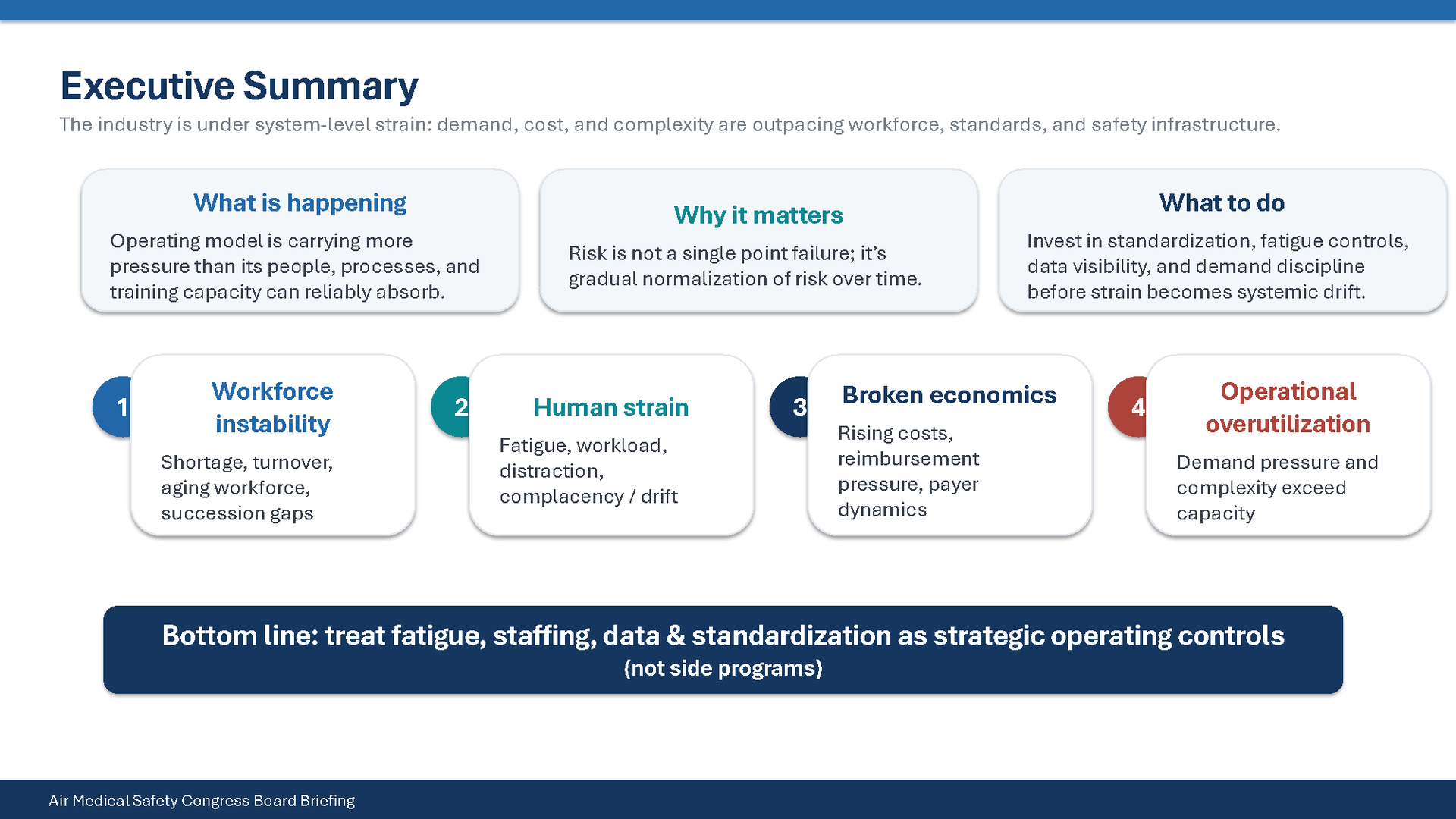
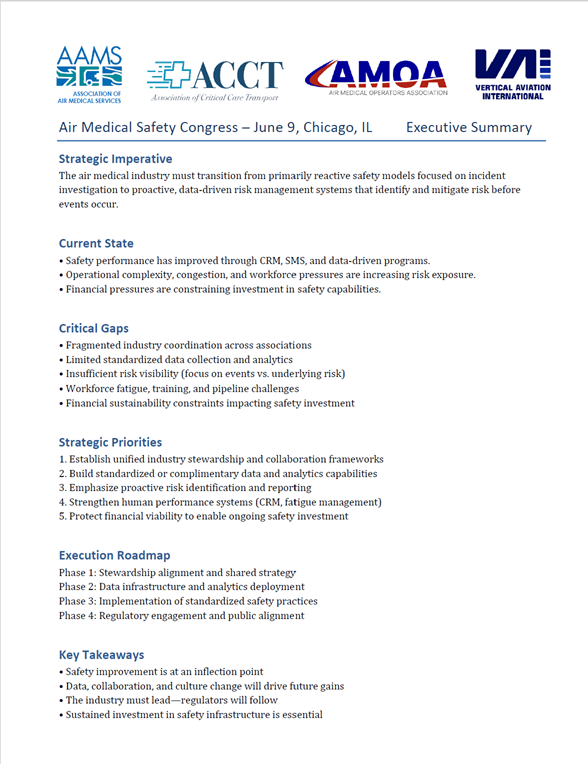
Last month, industry leaders gathered in Chicago for the Air Medical Safety Congress to discuss the future of safety in air medical transport. While the industry has achieved significant gains through Crew Resource Management (CRM), Safety Management Systems (SMS), and other data-driven initiatives, participants agreed that the next phase of progress requires moving beyond reactive incident investigation toward proactive, predictive risk management.
Attendees highlighted several emerging challenges, including increased airspace congestion, operational complexity, workforce pressures, and financial constraints that further stress resources. To continue improving outcomes, the industry must address gaps in coordination, data standardization, risk visibility, workforce development, and long-term financial sustainability.
A major focus of the Congress was collaboration. AAMS, ACCT, AMOA, and VAI are engaged in a landmark effort to strengthen industry coordination, align strategic priorities, define each organization’s areas of focus, and eliminate duplicative efforts. This collaborative approach reflects a shared commitment to being good stewards of limited resources while advancing common safety objectives. Participants agreed that the industry must continue to lead these efforts proactively, while sustaining investment in the people, systems, and infrastructure that make safe patient transport possible.
It should be noted that many of the initiatives discussed also support recommendations outlined in the recently published Air Ambulance Quality and Patient Safety (AAQPS) Report to Congress, particularly those related to data-driven safety management, enhanced collaboration, standardized safety practices, and continuous quality improvement.
The Safety Congress identified five strategic priorities:
- Strengthening industry stewardship and collaboration
- Building standardized data and analytics capabilities
- Expanding proactive risk identification and reporting
-
Enhancing human performance systems such as CRM and fatigue management
- Protecting the financial viability necessary to sustain safety investments
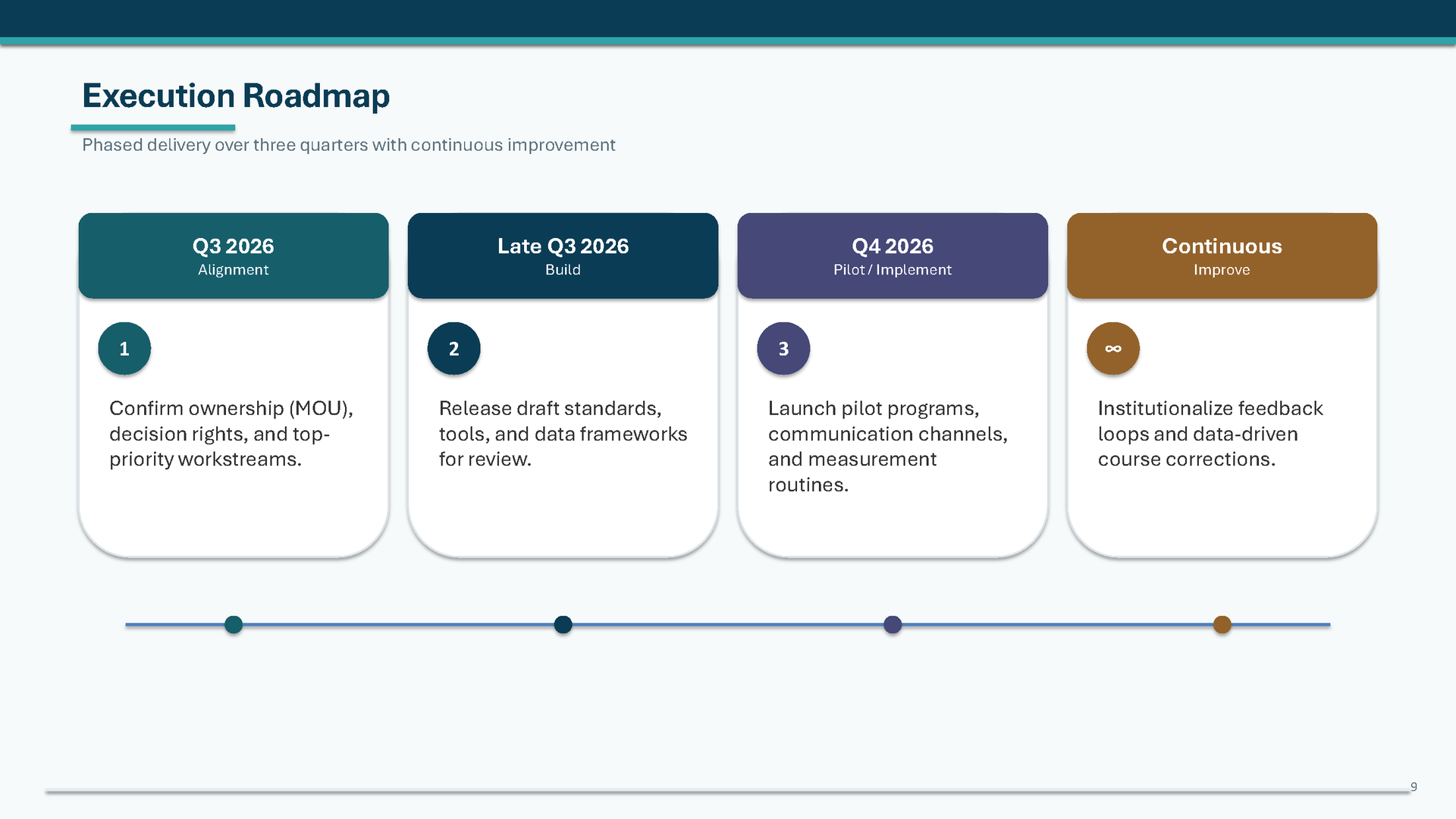
A phased implementation roadmap was also established, beginning with stakeholder alignment and shared strategy development, followed by data infrastructure and analytics deployment, standardized safety practices, and engagement with regulators and external stakeholders.
Momentum from the Air Medical Safety Congress will carry forward through several industry initiatives, including the Flight Crew Safety Summit at AMTC26 in Fort Worth this October, where stakeholders will continue shaping a shared vision for safety and operational excellence.
To learn more about the discussion, priorities, and roadmap ahead, we encourage members to review the full Air Medical Safety Congress collateral documents below.