Season’s Greetings, Virginians!
I want to let you in on a little secret: fall is probably my least favorite season. Well…maybe it’s not a secret anymore. I told more than a few people that “September is a mood,” and I spent much of it reminding myself, “Just make it to Election Day, then the big deadlines and the youth fall baseball season will be behind me.”
But as I reflect on 2025 and my first year as President, I’ve realized October ended up being a highlight, mainly because of Fall Summit. I was genuinely looking forward to seeing so many of you in our education sessions, celebrating our award recipients, competing with you at PAC Trivia, catching up with friends, and making new connections across our physical therapy community. Fall Summit didn’t disappoint! There is much to look forward to in 2026… and the good news is that I won’t have to wait long to see many of you again.
Lobby Day
While it’s more formal than Fall Summit, Lobby Day has become one of my favorite chapter events. Watching students and clinicians come together to advocate for our profession is incredibly meaningful. Whether we’re on an “appreciation tour” thanking state legislators for their support or actively championing specific policies, our presence in Richmond matters. It moves our profession forward, protects patients and the public, and promotes the Commonwealth’s community of students and clinicians. I hope you’ll join us in Richmond and attend one of our upcoming virtual information sessions to prepare.
Even if you can’t be with us in person, please consider making a donation to the APTA Virginia PAC. Your contribution is just as essential as in-person advocacy, and the new recurring monthly options make ongoing support more accessible and sustainable throughout the year ahead.
APTA Virginia Awards Season
I personally love nominating and supporting colleagues for awards. To me, it feels like writing a heartfelt thank-you note…only this one gets addressed to an Awards Committee. As you wrap up your year, I encourage you to reflect on the colleagues who have made a difference in your professional life and consider submitting a nomination. The APTA Virginia Awards Season is now open, and nominations will be accepted through February 1. I look forward to recognizing the 2026 recipients at next year’s Fall Summit!
CSM 2026
It may be a West Coast conference this year, but I trust I’ll see plenty of incredible Virginians in Anaheim! If you’re presenting a session, poster, or platform at CSM, please let us know at [email protected]. We would love to highlight your success on our social media platforms, and I would personally love the chance to hunt you down and cheer you on in February.
Resolve to Be Involved
If your New Year’s resolutions include getting more involved in professional service, you’re in luck. We recently shared our current opportunities in a “Find Your Fit” email campaign. We are looking for members interested in serving as Committee Members (Chapter level) or Community Engagement Coordinators (Regional level). These are wonderful entry points into the work of APTA Virginia. You can submit the interest form, and I’d love to hear from you if you have questions about any of these roles.
Strategic Plan
Our APTA Virginia Strategic Plan for 2025–2028 will be in full motion as we enter the new year. This past year has been foundational; we’ve clarified the ways APTA Virginia is uniquely positioned to advance our profession. I encourage you to explore the plan overview and consider how you might contribute to its success.
One of our major priorities is ENGAGEMENT, and we’ve spent time defining how we will meaningfully measure it. I recently connected with APTA Georgia President Ben Braxley on the APTA Orthopedics podcast to talk about the challenge of quantifying a concept as broad and nebulous as “engagement.” I’ll close this message with a sentiment I shared in that conversation:
Some members “only” pay their dues.
Some attend our events or use our resources without” giving back” in a formal role. Some serve in elected or appointed positions and dedicate significant time to advancing the chapter’s mission. Wherever you find yourself on this spectrum of membership and engagement, you are valuable and meaningful to us as our member. A member is a member, all members have value, and each member has a place in our APTA Virginia community.
As we close out 2025, I hope you find moments of rest, joy, and connection with those you cherish most. Thank you for all the ways you have participated in and contributed to the work of APTA Virginia this year. I’m deeply grateful to serve alongside you, and I look forward to all that 2026 holds for us as a chapter and a community. Wishing you a peaceful, warm, and happy holiday season, |
|
|
| Emily J. Hawkins, PT, DPT, PhD APTA Virginia President |
|
|
The Pediatric Special Interest Group (PSIG) has had an exceptionally busy and rewarding fall! We are delighted to share a recap of our recent activities and look ahead to exciting opportunities for collaboration.
Inspiration and Advocacy
Our recent events offered valuable insights for pediatric physical therapy professionals: |
-
September Meeting: We kicked off the fall with an inspiring presentation by Tom Bohanon, Jr., PT, DPT and Maria Jones, PT, PhD on "Advocacy in Action: Empowering Pediatric Physical Therapists Through Legislative Engagement."
-
October Fall Summit: The annual Fall Summit featured a robust pediatric track and saw excellent attendance from many of our PSIG members. A special note of gratitude goes to Connie Johnson, a long-time PSIG member, for her instrumental work on the Fall Summit Planning Committee.
-
November Educational Session: Following our annual business meeting, we hosted a critical presentation by Amy Schlessman, PT, DPT, DHSc covering emergency evacuations for children with disabilities.
|
Leadership and Opportunities to Serve
We held our annual meeting in November and are pleased to welcome our newly elected leadership: |
- Co-Chair: Katie Labuda
- Secretary: Lauryn Shirkey Comer
|
We are actively seeking passionate members to take on additional leadership roles within the PSIG. If you are interested in shaping the future of pediatric physical therapy in our state, please reach out to our Chair, Michele Wiley ([email protected]).
Share Your Expertise: Call for Summit Presenters
We encourage you to share your unique expertise with the broader membership! We are now seeking presenters for next year’s Fall Summit pediatric content. To help interested members prepare successful submissions, we will be hosting information sessions in January. Please consider applying to present—your contribution is invaluable to our profession! |
Join Us for Our Next Session!
Mark your calendars for our upcoming meeting on January 20, 2025, where Marlowe Muehlbauer, PT, DPT will present on functional neurological disorder. |
Remember, any APTA VA member is welcome to join the PSIG! All presentations are free of charge for APTA VA members and offer Type I CE hours. We look forward to seeing you there! |
The Program Engagement Contest (PEC) is back for another year—and it’s time for all Virginia PT and PTA programs to enroll!
Each program designates a faculty and student contact, completes engagement tasks throughout the year, and submits them to earn points. The contest runs from December 1–September 30, with leaderboard updates shared at major APTA Virginia events.
At the end of the season, one PT program and one PTA program will take home the title of Most Engaged Program, receive the Golden Gait Belt, and be awarded $700 (PT) or $300 (PTA) to celebrate their achievement.
Our 2025 champs? Old Dominion University clinched the Most Engaged Program title! Unfortunately, we weren’t able to name a PTA winner last year because no PTA programs participated—let’s change that this year. If your program hasn’t signed up yet—now’s the time! |
Dear Program Directors and APTA Liaisons,
Please forward this urgent announcement to all DPT and PTA students in your programs to boost participation in the Virginia Student Special Interest Group (SSIG) Executive Committee elections. Applications are now open until January 15, 2026 - you must be a current APTA member! TIME TO GET INVOLVED!
The Virginia SSIG seeks motivated DPT/PTA students for the 2026-2027 Executive Committee. Leadership roles build resumes, networks, and skills while shaping student advocacy in Virginia PT.
Available Positions and Key Responsibilities: -
Chair: Prepares agendas, reports to Chapter Board, attends meetings, writes articles for The Virginian, serves as spokesperson.
- Vice-Chair: Assists Chair, assumes duties in absence, supports activities.
- Secretary: Records minutes, notifies members of meetings, co-writes articles.
- Treasurer: Manages funds, develops budget.
- Director: Coordinates student/faculty liaison programs.
-
PTA Representative: Liaises with PTA programs, relays student concerns.
- Nominating Committee Chair-Elect: Builds nominee pool, identifies slate, conducts elections (2-year term).
- Nominating Committee Chair: Promotes nominees, conducts elections.
- Nominating Committee Member: Supports committee activities and SSIG projects.
Detailed responsibilities: Click Here
Election FAQs: Click Here |
Encourage students to apply – strong participation strengthens our voice! Questions? Direct to SSIG contacts via the links. Thank you for spreading the word. Best regards, Seth Stanley |
Nominations are open for the APTA Virginia Chapter Awards. This is your opportunity to celebrate the clinicians, researchers, educators, physical therapist assistants, and early-career professionals who make a difference every day. Award categories include clinical excellence, community service, leadership, research, and more. You don’t need a title to nominate someone—just a story worth sharing! Submit your nomination by February 1, 2026! |
New data provides PTs and PTAs with industry-leading insights to inform career decisions, workforce planning, and advocacy priorities.
Collecting and sharing workforce data is essential for enabling APTA members to make informed decisions about their careers and practices. By understanding demographic, workforce, and income trends, as well as challenges faced across practice settings, APTA provides the profession with actionable insights that support informed decision-making, fair payment advocacy, and stronger delivery of care.
APTA's 2025 Physical Therapy Profile Survey gathered insights from physical therapists and physical therapist assistants to explore key factors related to workforce dynamics. The findings are detailed in two reports: "A Physical Therapy Profile: Demographics of the Profession" and "A Physical Therapy Profile: Incomes for the Profession." Together, these reports offer the most current snapshot of the physical therapy workforce and highlight trends in income, diversity, and student enrollment.
|
APTA Virginia is looking for passionate, knowledgeable speakers to lead 1.5-hour educational sessions at next year's Fall Summit.
If you have a topic that's evidence-based, ethically grounded, and engaging for PTs and PTAs, we want to hear from you! Current areas of interest include: AI in Academia, Emergency Management, Acute Care, Autism, How to Get Involved in Research, Women's Health, Pediatric Pelvic Health, and Leadership/Business courses.
Educational Session Requirements (1.5 hours):
• Title (≤15 words)
• 250-word session description
• 3–4 learning objectives
• Minimum of 5 primary-source references (≤10 years old, evidence-based)
• Timed outline aligned with objectives
• Speaker credentials, bio, experience, and keywords
• Teaching/learning assessment methods
• Recommended content level
• Conflict of interest disclosure
Priority consideration will be given to APTA Virginia members, Virginia-based presenters, applicants who waive honorariums, and sessions that are interactive and research-supported.
Please note: proposals must not include promotional content. If selected, speakers will receive one complimentary registration and will be required to meet all submission deadlines and provide materials. |
|
|
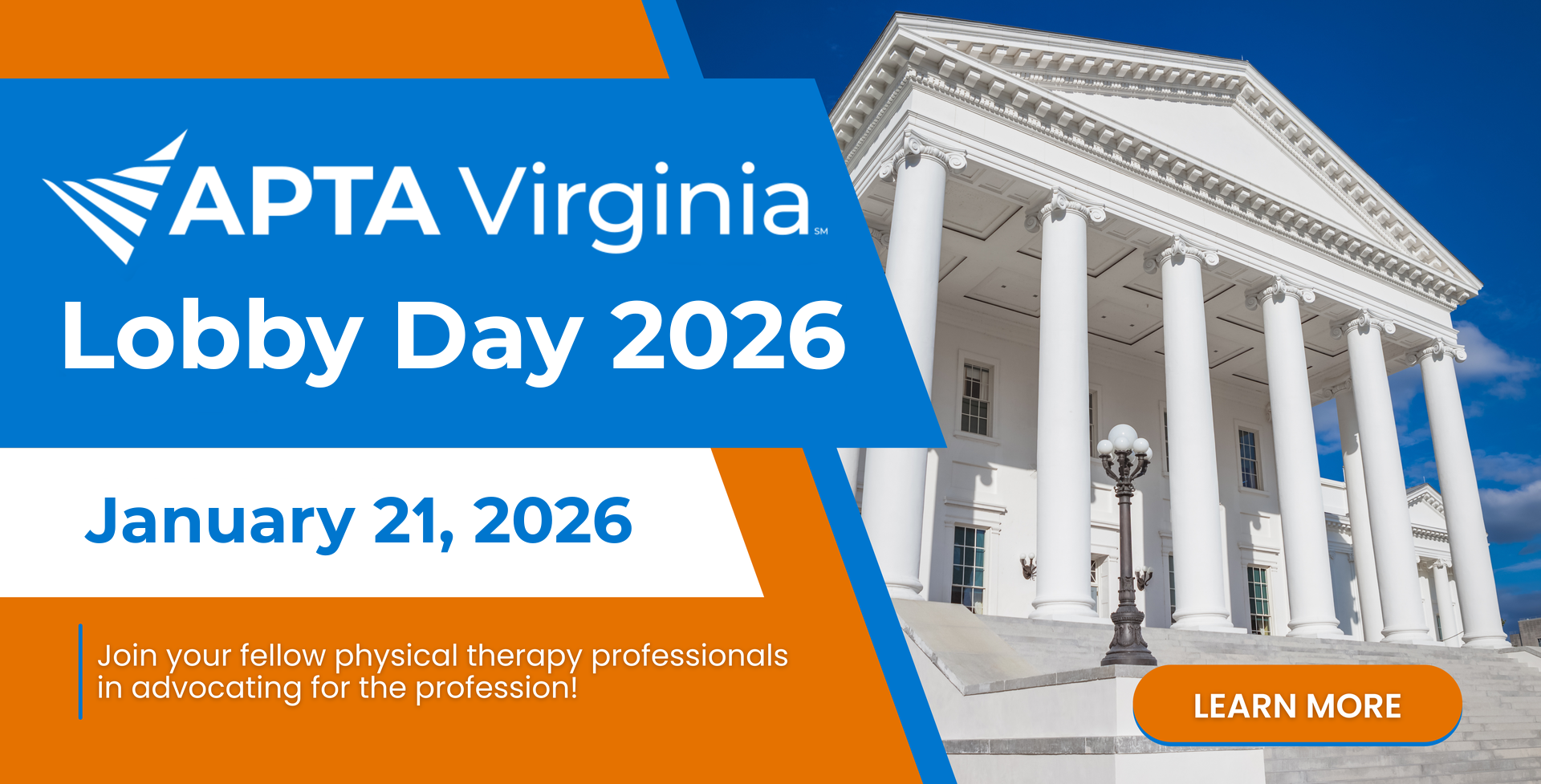
We’re heading back to the Capitol on Wednesday, January 21 to advocate for the profession and our patients.
Not sure what to expect when meeting with legislators—or how to prepare? Our Lobby Day Interest Meetings and Advocacy Made Simple, developed in partnership with Lumin Strategies, can walk you through everything to expect. Where do you want to start? |
Thanks to our Treasurer Andrew Baldwin, the PAC now has the option to take recurring payments in the following amounts:
Silver PAC Partner ($5/month) Gold PAC Partner ($10/month) Platinum PAC Partner ($20/month)
Executive PAC Partner ($50/month) Presidential PAC Partner ($100/month)
Your ongoing support strengthens our ability to advocate for the physical therapy profession in Virginia. By becoming a recurring PAC Partner, you’ll help ensure we have the resources to protect and advance our practice year-round. Please give today! |
|
|
Want to feel more confident recognizing and treating Functional Neurological Disorder in kids? Join Marlowe Muehlbauer, PT, DPT, for a clear, clinically focused session that breaks down what pediatric PTs really need to know about FND and dysautonomia.
You’ll learn how to identify key inclusion criteria, apply appropriate outcome measures, and avoid common pitfalls that can lead to iatrogenic harm—all grounded in current evidence and everyday clinical practice.
If you’re ready to strengthen your differential diagnosis skills and better support the multidisciplinary care team, this is a must-attend session! 📅 Date: Tuesday, January 20, 2026
🕗 Time: 8:00 PM EST
📍 Location: Virtual |
|
|
Looking for a self-employed Physical Therapist to join The Healing Arts Center.
One office space is now available for rent in Burke, VA at the The Healing Arts Center, which is a collective of 5 individual rooms in one office suite. The office is on the first floor with no stairs and is handicap accessible. There is plenty of parking and is situated in a quiet group of
office buildings surrounded by trees. The Center has a small waiting area and a bathroom. Currently there is an Acupuncturist, a Lymphatic Massage Therapist, and an Esthetician-Micro Needling. All of the practitioners operate independently but share in the care of the waiting area and the bathroom. We are a friendly, respectful group that work well collectively to create a healing atmosphere in the office. We are looking for individuals who are responsible, respectful, and quiet.
Room #3 is 315 sq ft and the rent is $715/month
If you are interested, please contact Laura at [email protected]
|
|
|
You may access the survey by clicking on or scanning this QR code! |
|
PTs, PTAs, PT and PTA students: we’re inviting you to participate in an anonymous online research survey. The goal of this research study is to investigate physical therapist, physical therapist assistant, and physical therapist and physical therapist assistant student perceptions of sexual boundaries in your work or clinical environment and/or student professional environment. The survey is anonymous, and it will take approximately 15 minutes to complete. All responses in sections A-D are click and point responses or a 5-pt Likert scale response. Please be aware that the sexual boundary content may be sensitive and triggering to some participants. Thank you for your willingness to assist in this research! |
|
|
As a physical therapist in my late 40s, I recently felt the pull to return to the martial art that shaped much of who I am—Aikido. Its philosophy of harmony and fluidity deeply influenced my approach to life and patient care. However, reality intervened. Between the demands of ukemi—the rolling techniques—and my own bouts of vertigo, I realized Aikido was no longer the right fit for me.
So, I searched for the next best thing and discovered Kendo. What drew me in was not the technical mastery or sheer force, but the essence of the art: calmness, relaxation, timing, distance, and focus. These principles resonate with me both as a martial artist and as a clinician. While I am undeniably slower than my younger counterparts, maturity and life experience have given me perspective. I embrace what I teach my patients every day: slower is better. Concentrate on form. Value repetition. Trust consistency.
Even though I’m still in the early stages of my training, I’m in no rush to advance. Back then, my long-term goal when I practiced Aikido in the 1990s was to reach the black belt level. But today, it’s less about rank and more about the process, the journey, and moving at my own pace. I’m not trying to be the best in the club; I’m striving to be the best version of myself. I approach Kendo with the same passion I bring to my profession—pursuing excellence as a clinician for my patients.
I just hope my ankle tendinitis doesn’t get in the way, but if it does, I’m friends with the best therapist I know—myself—and I’ll figure out a way to treat it along the way. After all, both in the dojo and the clinic, progress is not about speed or brute strength—it’s about intentional movement, precision, and patience. In rehabilitation and in martial arts, mastery lies in the details.
About the Author
Rodolfo “RJ” Alora, Jr. is a physical therapist at Inova Alexandria Hospital with over 26 years of experience. He lives in Springfield, VA and is passionate about integrating lifelong learning, movement, and mindfulness into both his clinical practice and personal pursuits. |
What role can physical therapists and physical therapist assistants play before, during, and after emergencies and disasters? This APTA guidance explores that question, outlining how therapists contribute across preparedness, response, and recovery—both in the U.S. and internationally.
Developed through the APTA Leadership Scholar program, the guidance includes contributions from James Gosney, LPTA, MD, MPH an APTA Virginia member, alongside colleagues from other state chapters, highlighting the profession’s growing role in emergency and disaster preparedness. |
I have had DPT on my mind a good deal this year. APTA recently released APTA Consumer Perceptions: A Report from the American Physical Therapy Association, and a graphic representation of a result from that report (I found it on APTA’s Instagram account) caught my attention: only 40% of the general population and 49% of patients were aware that PTs are doctorate-level health professionals. This resonated with me because of my experience at Lobby Day 2025. When we were connecting with Virginia senators, delegates, and staffers about the need for “D.P.T.” and “Doctor of Physical Therapy” to be protected terms, there was inconsistent understanding that PTs are now trained at the doctorate-level. We were successful in getting SB1253 passed and enacted, but there is still work to do in increasing the public’s understanding of and appreciation of physical therapy professionals.
You may have seen headlines recently regarding physical therapy, nursing, and other professions being excluded from the list of “professional degrees” which could have higher limits on student loan borrowing. The RISE Committee (Reimagining and Improving Student Education) used a list of “professions” developed in the 1960s, when physical therapy education was still largely completed through bachelor’s degrees. The first two-year graduate program launched at Case Western Reserve University in 1960, and the first physical therapist assistants graduated in 1969. Our profession and American healthcare have both undergone tremendous change in the past 60 years!
Americans benefit from PTs being trained at the doctoral level. We’re no longer technicians simply carrying out orders to improve the mobility of war veterans or individuals affected by polio. We’re movement experts with a far wider scope of practice and professional responsibility who help our patients and clients live life to the fullest. We must interpret and apply evidence to deliver complex, patient-centered care. In all 50 states, PTs can provide some level of direct access to decrease patient costs and avoid delays in receiving physical therapy. Regardless of the practice setting or patient population, we help individuals return to work or school or sport, engage in personally important and meaningful activities, and experience a greater quality of life.
Physical therapy being recognized as a doctoring profession has important policy implications, not just as it relates to student loans. In Virginia, we intend to pursue legislative action or regulatory changes to allow PTs to perform DOT physicals, issue handicap placards, and order imaging studies. These privileges for PTs, already allowed in some other states, demonstrate just some of the value we offer by increasing patient access to care and services as well as decreasing the burden on the primary care workforce in Virginia.
The decision to make the DPT the sole entry-level credential for PTs is not without criticism. Elevating the entry-level degree inherently increases expenses and time to complete education; these costs prevent more people from entering the profession because they simply cannot afford the time and expense. The relatively high costs of education, in combination with stagnant payment from insurance companies and salaries/benefits from employers, are a significant factor keeping our profession from better representing the general population in terms of race, ethnicity, and lived experience. Student loan reforms, higher education reforms, and improved payment for physical therapy services are all essential to the sustainability of our profession and will take time to enact. However, if the Department of Education does not recognize the DPT as a professional degree, students enrolling in DPT programs in 2026 may struggle to afford physical therapy education. This is true even at institutions with lower tuition due to the combined burden of educational and living expenses and the proposed graduate-level caps on federal student loan borrowing.
If you’re a DPT, it’s imperative that you educate your patients, your colleagues, and even your political representatives about our current level of education, the demands of modern practice, and the value of physical therapy as a doctoring profession for patients and communities. You do this by providing excellent evidence-based care to each patient or client you care for each day. You can support initiatives that elevate and protect our profession, contact your federal representatives, or engage with your state representatives at Lobby Day in Richmond. You can join APTA Virginia in promoting the profession to the general public through PT Moves Me events and other community-facing campaigns. Our patients, our future colleagues, and our profession are depending on us to champion the DPT to shape policy, payment, and public perception in ways that ensure physical therapy is recognized and valued at every level.
|
Working in home health has changed the way I look at aging, movement, and independence. When I walk into a patient’s home, I see the real challenges they face. Many want to stay independent and active, but they feel limited by fear of falling or not knowing how to move safely. I also see how much confidence and quality of life improve when someone finally understands what their body can do with the right support. Those moments have shaped my passion for caring for older adults.
Over time, I realized that I wanted to do more than treat one patient at a time. I wanted to reach people earlier and give them the tools they need before they experience a fall or a loss of function. That is how the Safe Steps Foundation began. It started with simple home exercise sheets that I created for my patients. Over the past year, it has grown into community education and international outreach. Recently, I led two virtual fall prevention seminars for older adults in long-term care homes in India. Many of them had never spoken with a physical therapist before, and their enthusiasm showed me how great the need is.
Here in Maryland, I led a fall prevention seminar at a local church. Approximately 50 older adults attended, and many stayed afterward to ask questions about their balance, sleep, and daily routines. Those conversations reminded me why this work matters.
Safe Steps continues to grow with one purpose in mind: to make mobility education practical, accessible, and supportive for every older adult who needs it. |
Rehab 2 Perform: Building the Future of Performance Physical Therapy
Rehab 2 Perform (R2P) continues to redefine what it means to deliver patient-centered, performance-driven care. Recently honored as a 2025 U.S. Chamber of Commerce Growth Accelerator, and once again certified as a Great Place to Work® in Health Care, R2P is recognized nationally for its innovation, leadership, and team culture.
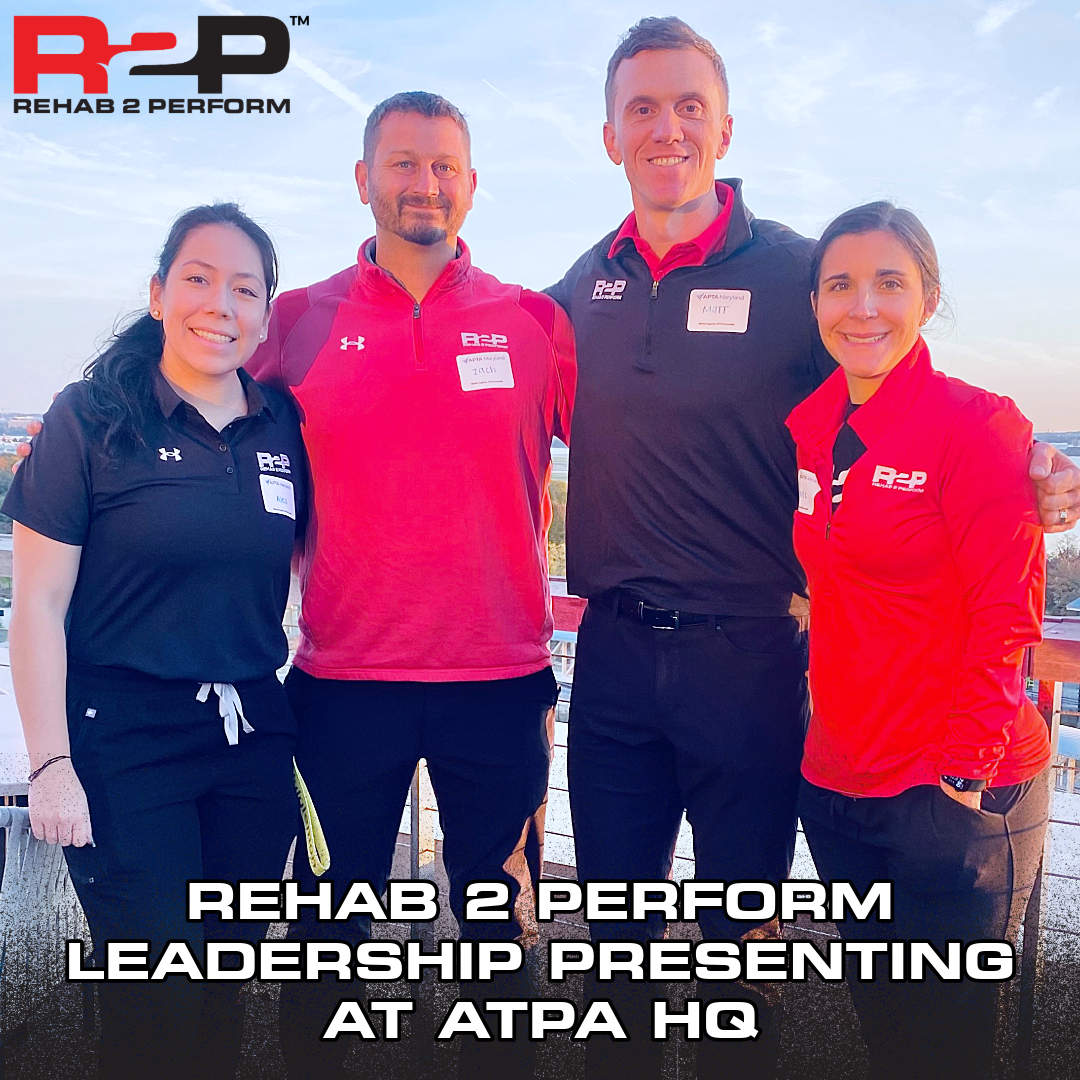
With 14 locations across Maryland and Northern Virginia, and more on the horizon, R2P continues to expand its reach while investing deeply in professional growth and community engagement. This fall, members of the R2P team were proud to represent at the APTA Virginia Fall Summit, connecting with clinicians and future leaders advancing the profession. The R2P executive team also visited APTA Headquarters, featured on The Hot Seat to discuss business growth, culture, and leadership within modern physical therapy.
At R2P, we believe athletes come in all forms, and our mission is to help every individual Be Ready 2 Perform in sport and in life. We’re always seeking passionate, forward-thinking professionals who want to grow with a purpose-driven team. Learn more or explore career opportunities at rehab2perform.com/careers |
I have been a Physical Therapist for almost 19 years, with just under 10 years exclusively specializing in Pelvic Health Physical Therapy. It is a great honor to share my first publication, contributing to the body of clinical literature. Hopefully, it won't be my last! This was a learning process for me, and through the highs and lows of the early COVID-19 pandemic we were able to keep working using the power of zoom (silver lining!). I greatly appreciate the support from my Department of Rehabilitation at VCU Health as well as my research co-authors Beth Shelly, MJ Strauhal, and Michelle Jernlsetten.
Physical Therapist Practice Patterns Utilizing Transcutaneous Tibial Nerve Stimulation for the Treatment of Overactive Bladder Background:
Pelvic health physical therapists (PTs) use a variety of treatment approaches to treat overactive bladder (OAB). Transcutaneous tibial nerve stimulation (TTNS) uses peripheral neuromodulation to deliver electrical current to the tibial nerve for the treatment of OAB. The purpose of this survey was to identify current practice patterns and barriers to implementation of TTNS.
Methods:
One hundred and seventy-eight surveys were electronically submitted by PT members of American Physical Therapy Association (APTA) Academy of Pelvic Health Physical Therapy (APHPT).
Results:
The use of TTNS by pelvic health PTs in the United States (US) varies widely. Only 30.6% of therapists noted using TTNS as first line therapy along with behavioral and lifestyle modifications. The most common reasons therapists do not use TTNS include precautions or contraindications and patient choice. Some therapists reported unfamiliarity with the research as a reason for not using TTNS. A significant association was found between a PT not being familiar with the research and how often TTNS was used ( P = .0111). The majority of therapists in this survey position electrodes on a single limb and used a pulse width of 200 or 250 microseconds (µsec), and a pulse frequency of 10 to 12 hertz (Hz) for 30 minutes. This aligns with current evidence.
Discussion:
TTNS should be considered in a pelvic PT treatment algorithm for OAB. Evidence suggests that providers increase their knowledge of TTNS and educators include instruction about TTNS in evidenced-based training in order to apply the modality effectively. |
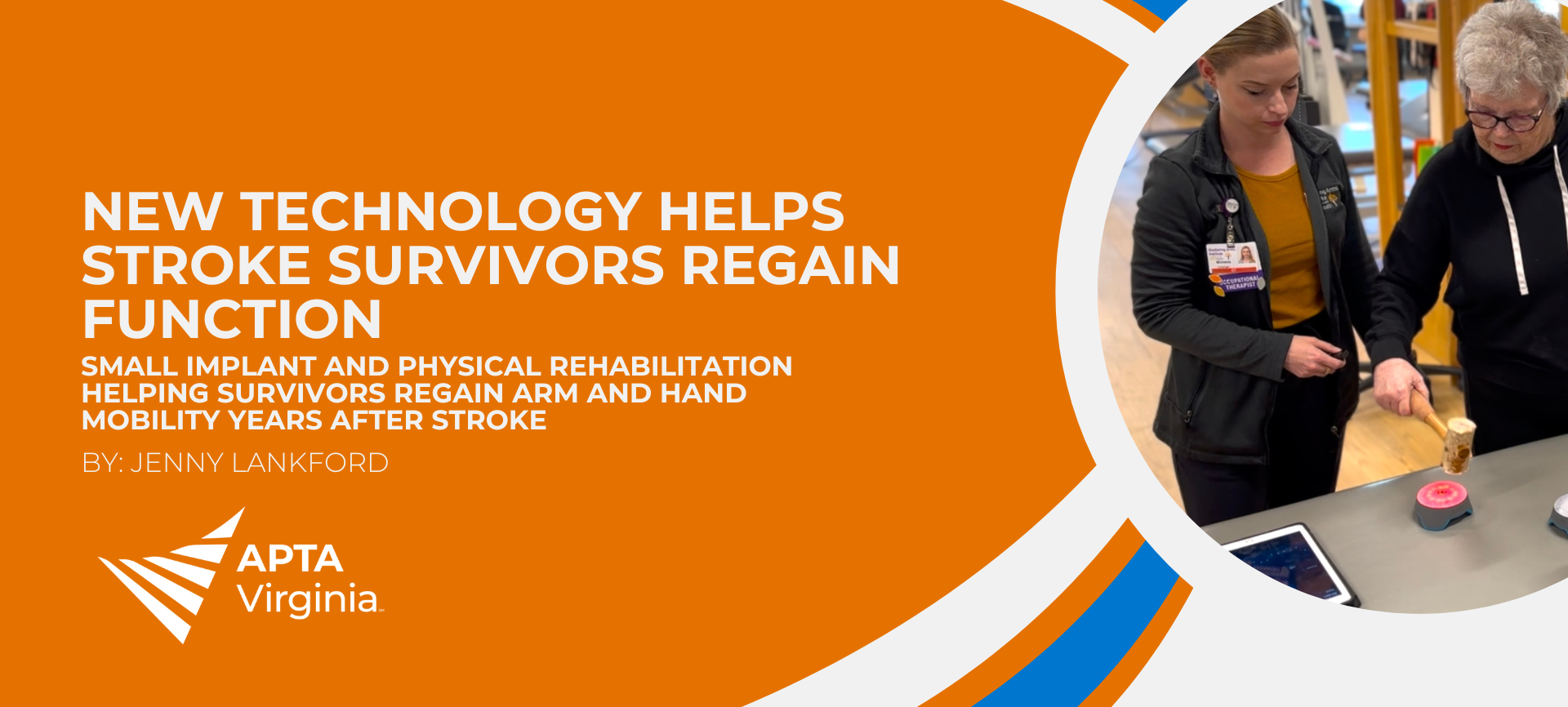
After not having arm or hand function for years, new technology paired with occupational therapy is giving stroke survivors like 76-year-old Debby Robertson a second chance at upper-extremity mobility. In April 2023, Robertson was taking care of her husband when she experienced a stroke, leaving her unable to walk or use the right side of her body. “My right hand was stuck in a fetal position like it was curled in on itself,” Robertson said.
However, Vivistim, a FDA-approved vagal nerve stimulation device, can enhance recovery among individuals who have experienced a stroke when combined with rehabilitative therapy. Implanted by a neurosurgeon during an outpatient procedure, Vivistim is placed underneath the skin in the chest—similar to a pacemaker—with coils that extend to the neck and wrap around the vagus nerve.
While vagal nerve stimulation has been used for decades to treat epilepsy, Vivistim is the first device being utilized to address upper-extremity deficits caused by stroke. Michaela Torraca, OTD, OTR/L, occupational therapist and clinical leader for Stroke and Brain Injury at Sheltering Arms Institute’s Hanover outpatient center, has been overseeing Robertson’s Vivistim treatment for several months. “I’m really excited that we’re able to offer this service and technology because we have so many stroke survivors who reach a point where they are functionally plateauing and are seeking out some other method to jumpstart those connections in their brain,” Torraca said. “It’s, in my opinion, one of the next steps in stroke recovery and rehabilitation to strengthen brain connections and ultimately improve arm and hand function.”
Ideal candidates for Vivistim are individuals who experienced their stroke at least six months ago and have some ability to grasp and release objects with movement in at least two fingers. Because the therapy involves intense physical activity, candidates must be able to functionally use their hand to some degree.
Once Robertson had the device implanted in January 2025, she began a six-week intensive therapy protocol at Sheltering Arms Institute. During each session, Torraca uses a remote control to trigger vagus nerve stimulation as Robertson completes functional tasks during therapy. Robertson also has a magnet at home she can swipe over the implant to activate the device while she completes her home exercises or additional functional tasks.
The outcomes, collected every 10 visits with Vivistim-specific assessments, have shown improvement in fine motor control and functional abilities of the arm affected by the stroke. “I have seen fairly significant progress in upper-extremity functional use in day-to-day tasks, whether that’s cooking, laundry, bathing, or driving,” Torraca added.
Robertson is thrilled with the improvements she’s experienced with this technology saying, “I made soup last weekend and I didn’t have to ask for any help, even though opening cans and packages are usually really hard for me. I’m just happy to represent something that shows promise for individuals with strokes.”
Currently, Sheltering Arms Institute offers occupational therapy in conjunction with the Vivistim implant at its Hanover outpatient center to help patients regain the most function in their upper extremities.
If you or someone you know may be interested in the Vivistim implant, ask your physician if you are eligible, or visit the Vivistim website for helpful information to see if you are a good candidate.
About Sheltering Arms Institute
Sheltering Arms Institute is a non-profit and donor-supported state-of-the-science physical rehabilitation hospital and network of outpatient centers in Richmond, Virginia that brings together the brand and clinical reputation of Sheltering Arms and the nationally ranked programs and research of VCU Health through a joint venture. Ranked best in Virginia and among the nation’s top physical rehab hospitals by U.S. News & World Report, the Institute blends advanced technology, research, and evidence-based clinical treatment to create an innovative, transdisciplinary model of rehabilitative care that facilitates superior outcomes for patients. For more information, please visit ShelteringArmsInstitute.com.
|
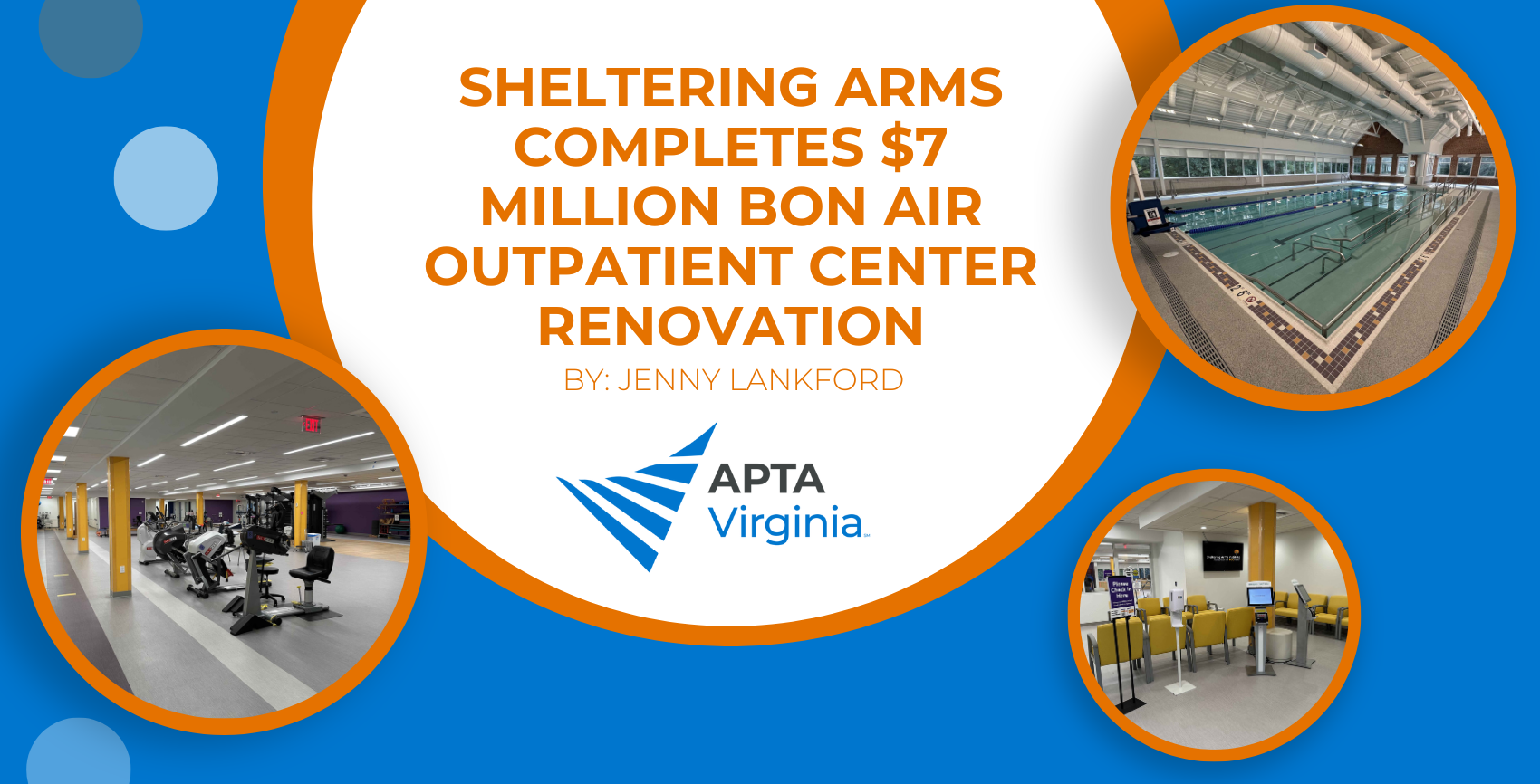
In demonstration of its ongoing commitment to our community, Sheltering Arms Hospital (d.b.a. Sheltering Arms Community Programs)—the majority joint venture partner of Sheltering Arms Institute—has completed a $7 million renovation of its Bon Air Outpatient Rehabilitation Center located at 206 Twinridge Lane in Chesterfield County.
The project to renovate 22,150 square feet of existing space began in December 2024 and was completed in just under a year. Key improvements made through this remodel include transforming 1,488 square feet of previously vacant space into usable areas for therapy and fitness services; removing several interior walls to create an open-concept clinic and enhance accessibility for larger wheelchairs and walkers; and expanding waiting areas for comfort. The renovation also introduced new pool decking and locker rooms; additional advanced rehabilitation technology; new HVAC; and refreshed branding throughout with updated lighting, flooring, and paint.
“Our Bon Air Center is our largest outpatient facility, providing nearly 30,000 patient visits each year. It also serves as home to several of Sheltering Arms’ adaptive and medical fitness programs,” said Alan Lombardo, CEO of Sheltering Arms Institute. “With the completion of these renovations, we are now able to serve an additional 500 individuals recovering from illness or injury each year, significantly expanding access to our rehabilitation services to the Central Virginia community and beyond.”
Funded by the philanthropic support of generous donors to Sheltering Arms Foundation as well as operating funds on hand, the construction project was completed under the architecture firm Hummel & Associates, pool contractor Paddock Pools, and general contractor J.A. Heisler.
The Bon Air Center was first constructed in 1993 and opened in 1994; Sheltering Arms has been the sole property owner. Today, it is a destination physical rehabilitation facility that offers physical, occupational, and speech therapy services in addition to several specialized rehabilitation and adaptive fitness programs for conditions such as concussion, balance and vestibular impairments, developmental disabilities, multiple sclerosis, stroke, spinal cord injury, traumatic brain injury, and limb loss as well as other various neurological and orthopedic disorders. Children’s Hospital of Richmond at VCU also leases 7,341 square feet from Sheltering Arms on the Bon Air campus, which will continue into the foreseeable future.
|
|
|
|