Legislature completes budget in one-day special session. What it means for
your business.
On Monday, Governor Walz convened a special session of the Legislature to pass
the remaining budget bills that had been agreed upon by caucus leaders and the
governor. In all, 14 bills were passed, completing the $66 billion budget for
͏ ͏ ͏ ͏ ͏ ͏
͏ ͏ ͏ ͏ ͏ ͏
͏ ͏ ͏ ͏ ͏ ͏
͏ ͏ ͏ ͏ ͏ ͏
͏ ͏ ͏ ͏ ͏ ͏
͏ ͏ ͏ ͏ ͏ ͏
͏ ͏ ͏ ͏ ͏ ͏
͏ ͏ ͏ ͏ ͏ ͏
͏ ͏ ͏ ͏ ͏ ͏
͏ ͏ ͏ ͏ ͏ ͏
͏ ͏ ͏ ͏ ͏ ͏
͏ ͏ ͏ ͏ ͏ ͏
͏ ͏ ͏ ͏ ͏ ͏
͏ ͏ ͏ ͏ ͏ ͏
͏ ͏ ͏ ͏ ͏ ͏
͏ ͏ ͏ ͏ ͏ ͏
͏ ͏ ͏ ͏ ͏ ͏
͏ ͏ ͏ ͏ ͏ ͏
͏ ͏ ͏ ͏ ͏ ͏
͏ ͏ ͏ ͏ ͏ ͏
͏ ͏ ͏ ͏ ͏ ͏
͏ ͏ ͏ ͏ ͏ ͏
͏ ͏ ͏ ͏ ͏ ͏
Legislature completes budget in one-day special session. What it means for your business.
|
On Monday, Governor Walz convened a special session of the Legislature to pass the remaining budget bills that had been agreed upon by caucus leaders and the governor. In all, 14 bills were passed, completing the $66 billion budget for the next two years.
This session and special session saw a much more balanced approach in the Legislature, thanks to a tied House and one-vote majority in the Senate. The Minnesota Chamber is grateful to the policymakers who championed thoughtful decisions, protecting the private sector, and while we celebrate these outcomes, we know the work to improve Minnesota's economic performance continues.
Minnesotans and businesses alike can feel secure knowing that costly provisions were stopped, and we made real progress on permitting reform – a crucial step for business expansion and investment that also upholds our high environmental standards. It's clear that business, labor and communities across Minnesota agree that a strong economy and a healthy environment go hand-in-hand.
See below for an issue-by-issue breakdown on what passed, what didn't and what it means for your business.
And if you’d like more details on the policies that passed and our work developing our agenda for the 2026 session, please join one of our policy committees.
|
|
|
ISSUES IMPACTING THE BUSINESS COMMUNITY
|
|
|
WINS
- No new personal income or business taxes – the Chamber successfully advocated against harmful tax proposals like increases to the state’s corporate tax rate, a 5th tier income tax, an increase in the net investment income tax, reductions to the Net Operating Loss deduction, a first in the nation social media excise tax and others.
- Passage of partial refundability for the state’s Research and Development Tax Credit to further incentivize R&D jobs and spur start-up innovation.
- Extended the state’s sales tax incentives for data centers of all sizes and increased the length of time facilities are eligible to receive those incentives to protect Minnesota’s existing data centers and promote the development of more in the future.
CONTINUED CHALLENGES
- No progress on Minnesota high top-line income tax rates (2nd highest corporate rate and 6th highest personal income rate).
- No progress on tax administration proposals that would make navigating Minnesota’s complex tax code simpler and more predictable.
|
|
|
Environmental permitting reform
|
WINS
- One of the Minnesota Chamber's top priorities this session was improving the state's permitting process and timelines. A number of important provisions were passed, including: addressing completeness of applications, restoring local control of review petitions, clarifying the process for beginning review of projects and more.
- The Legislature also scaled back heavy-handed environmental regulations on businesses by exempting certain consumer products.
- No new environmental mandates on businesses, such as a new Extended Producer Responsibility program for electronic waste, provisions that would’ve made permitting more difficult and no further chemical bans.
CONTINUED CHALLENGES
- No modifications for commercial/industrial use of broad chemical mandates.
- No modifications to the paper and packaging Extended Producer Responsibility program.
- Further recommendations from the Minnesota Chamber Foundation Report, Streamlining Minnesota’s environmental permitting process.
|
|
|
WINS
- “Administrative” modifications to the sick and safe time mandate regarding notice, documentation and advancing hours.
- A reduction in the paid family and medical leave mandate’s payroll tax cap to 1.1%, down from 1.2%.
- No new workplace mandates. Notable proposals that were introduced but not passed included: allowing striking workers to collect UI; an increase of the minimum wage to $20/hour; additional job postings disclosure requirements; CEO pay ratio tax penalties; changing the standard as to whether an individual is an employee; holiday overtime pay requirement; and a ban on “stay-or-pay” provisions, among others.
CONTINUED CHALLENGES
- No substantive modifications to the sick and safe time mandate. The Chamber sought to repeal the “more generous PTO” issue and provide targeted small business exemptions.
- No modifications to the noncompete ban.
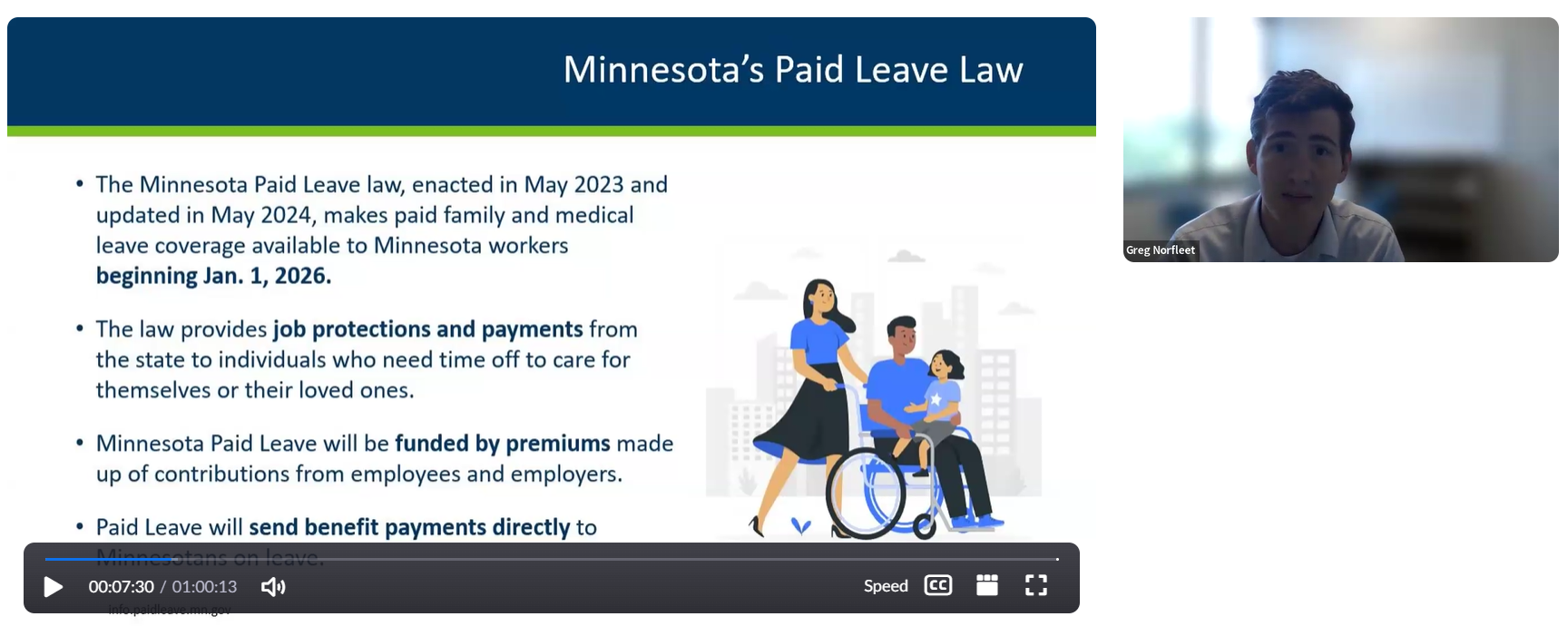
- No improvements made to the paid family and medical leave mandate, which is set to take effect January 1, 2026. The Chamber sought to delay the implementation of this law by one year; reduce the combined number of weeks; realign the definition of “family” member; make it easier for employers to offer a private plan; and pursue better small business provisions.
|
|
|
WINS
- Reinsurance extended for 2026 and 2027.
- Public Option authorization repealed.
- No new health insurance mandates.
- Increased Medicaid payments to hospitals, reducing cost pressure on private insurance.
CONTINUED CHALLENGES
- "Frozen Formulary" regulation passed, limiting cost controls for Rx drugs.
- One new health insurance tax passed, raising insurance costs $1.7 million a year.
|
|
|
Toward the triple aim of affordable, reliable and cleaner energy
WINS
- No new mandates.
- No new added costs to rate payers.
- Base budget funding agencies passed.
- Data center policy changes intersected with Energy Policy (see below.)
CONTINUED CHALLENGES
- Working toward the repeal of the ban of new nuclear generation.
- Working toward the repeal of the ban on new hydroelectric generation.
|
|
|
WINS
- Training requirements for broadband installers were reformed while keeping high standards for installers.
- No additional mandates.
|
|
|
- Data center construction will be subject to permitting for water usage, provisions for protection of existing rate payers, energy tariffs for new transmission infrastructure and fees to support weatherization benefiting low-income Minnesotans.
- An acknowledgement that the PUC will be evaluating a "very large user" class of ratepayer in an upcoming docket.
|
|
|
How can your business comply with the Paid Family and Medical Leave mandate
|
Minnesota's Paid Family and Medical Leave mandate will go into effect on January 1, 2026. In order to help businesses comply with this mandate, the Minnesota Chamber hosted a webinar last week with DEED to provide guidance for your company.
|
|
|
Join us at a stop near you to discuss the 2025 legislative session, June 11-24
|
The Minnesota Chamber’s 2025 Statewide Policy Tour is your opportunity to hear how recent legislative actions will impact your business.
Learn how the Legislature responded to the input of businesses across the state. Find a stop near you and share your perspective.
|
|
|
|
380 St. Peter St. Suite 1050 St. Paul, MN 55102 US

|
|
|
|