Dear Colleagues,
As I reflect on the first months of this year—marked by a challenging combination of sick days and snow days—I find myself deeply grateful for what our community has already accomplished in 2025.
We had a successful Lobby Day in January, bringing over 120 students and professionals to Richmond to advocate for physical therapy. Soon after Lobby Day, we celebrated the passage of SB 1253 through both the Virginia Senate and House, a critical measure protecting our professional titles "DPT" and "Doctor of Physical Therapy" from unauthorized use. This victory didn't just happen overnight—it represents our collective, continued dedication to preserving the integrity of our profession.
I urge you to stay connected through APTA's social media channels and to monitor your inbox closely. Our profession's evolving challenges require us to remain vigilant and ready to act, especially since the legislative climate can be unpredictable and dynamic. The upcoming Capitol Hill Day in July will offer a powerful platform for federal advocacy; I plan to be there and hope you will consider joining me.
CSM in Houston was a blast! Virginia's presence was felt everywhere: our students from Shenandoah and Marymount competed in the Knowledge Bowl, members presented innovative educational sessions, researchers delivered platform and poster presentations, and newly board-certified specialists celebrated their achievements. These moments of excellence represent who we are as a community. Plus, being together and catching up with colleagues is just plain fun!
During the Component Leadership meetings, I was particularly encouraged by APTA President Kyle Covington's timely message about creating a community where everyone feels welcome. APTA Virginia echoes this commitment to building a community that advances the profession of physical therapy to improve the health of society.
As we prepare to revisit and revise our strategic plan next month, I am eager to consider how we can further strengthen our chapter and create even more engaging experiences for our members. The collective vision and wisdom of leaders from across Virginia will help chart a course that serves our clinicians, members, patients, and profession with a thoughtful, sustainable approach. Each of you makes our community a stronger, more vibrant profession, and I look forward to seeing what else we will achieve together this year. |
|
|
| Emily J. Hawkins, PT, DPT, PhD APTA Virginia President |
|
|
Enhancing Fall Prevention Through Locomotor Adaptation Research |
|
|
Falls remain a leading cause of injury and loss of independence in older adults [1, 2]. Effective fall prevention requires both proactive gait control —anticipating and adjusting movements before stepping—and reactive control—quickly responding to unexpected disturbances [3, 4]. While these strategies are critical for maintaining stability, the way they interact during continuous walking remains less understood, particularly in aging populations.
Our work at the Macon and Joan Brock Virginia Health Sciences at Old Dominion University aims to understand how older adults adapt their gait to maintain stability. Using motion capture, force plates, and cognitive assessments, we examine how aging impacts coordination through changes in cognition, sensory processing, and muscle function. This research aligns with my long-term agenda to advance biomechanics, fall prevention, and rehabilitation for older adults. The novelty of this project lies in examining the timing mechanisms and gait subphases involved in foot placement adjustments, addressing current literature gaps. It will provide foundational insights into the temporal dynamics of foot placement control, informing personalized interventions [5] to optimize gait strategies and quantify fall risk using biomechanical metrics. By understanding how proactive and reactive strategies interact, we can develop targeted rehabilitation strategies that include task-specific gait training, gait-phase specific training, dual-task exercises, and real-time perturbation-based therapy.
We welcome input from physical therapy and rehabilitation clinicians, researchers, students, and other professionals interested in enhancing fall prevention strategies. If you’d like to learn more, contribute to this work, or explore ways to collaborate, please reach out! Your involvement can help shape future interventions that improve stability, mobility, and overall quality of life for older adults.
Author: Ashwini Kulkarni, PT, PhD, Assistant Professor, School of Rehabilitation Sciences, [email protected] References: [1] Houry, D., Florence, C., Baldwin, G., Stevens, J. & McClure, R. 2016 The CDC Injury Center’s response to the growing public health problem of falls among older adults. American journal of lifestyle medicine 10, 74-77. [2] Control, C.f.D. & Prevention. 2017 Centers for Disease Control and Prevention Web-based injury statistics query and reporting system (WISQARS). National Center for Injury Prevention and Control. Retrieved from https://www. cdc. gov/injury/wisqars/index. html. [3] Bierbaum, S. 2013 Proactive and reactive adaptability of elderly adults with respect to dynamic stability.
[4] Woollacott, M.H. & Tang, P.-F. 1997 Balance control during walking in the older adult: research and its implications. Physical therapy 77, 646-660. [5] Burns, E., Kakara, R. & Moreland, B. 2023 A CDC compendium of effective fall interventions: what works for community-dwelling older adults. |
|
|
A Step Forward in Physical Therapy Research |
|
|
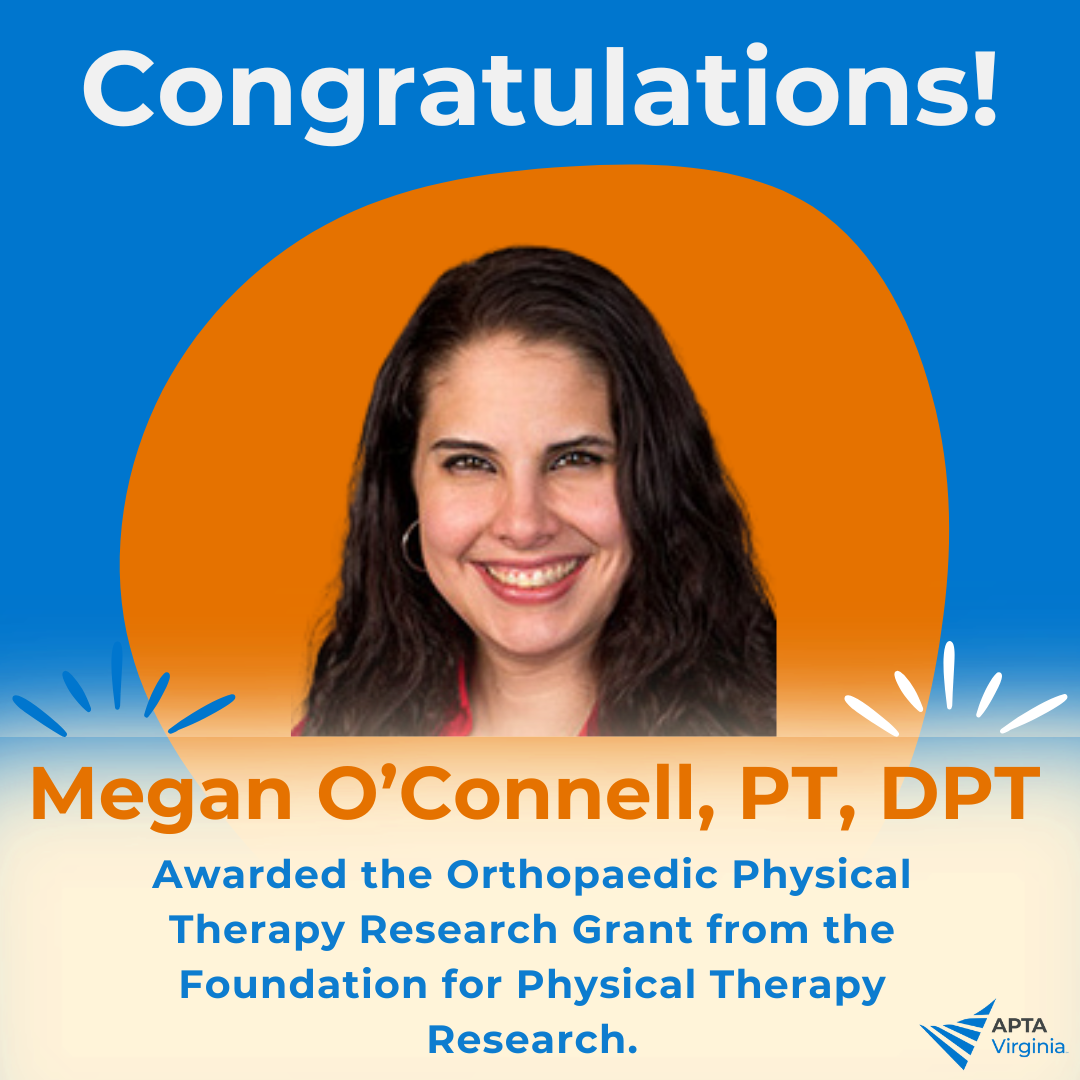
We are thrilled to share that Megan O’Connell, PT, DPT, a valued member of our chapter, has been awarded the prestigious Orthopaedic Physical Therapy Research Grant from the Foundation for Physical Therapy Research. Megan, an investigator at The Henry M. Jackson Foundation for the Advancement of Military Medicine, will use this grant for her important study, "Efficiency and Equity of Dry Needling in Physical Therapy Practice." We are excited to support her research and look forward to the valuable insights it will provide.
|
|
|
Huge congratulations to Ah'rea Jones, our Student Minority Scholarship winner! We're so proud of her achievements and look forward to celebrating her at the Fall Summit Annual Members Meeting in October. Well deserved!
|
|
|
Newly Appointed PTA Director |
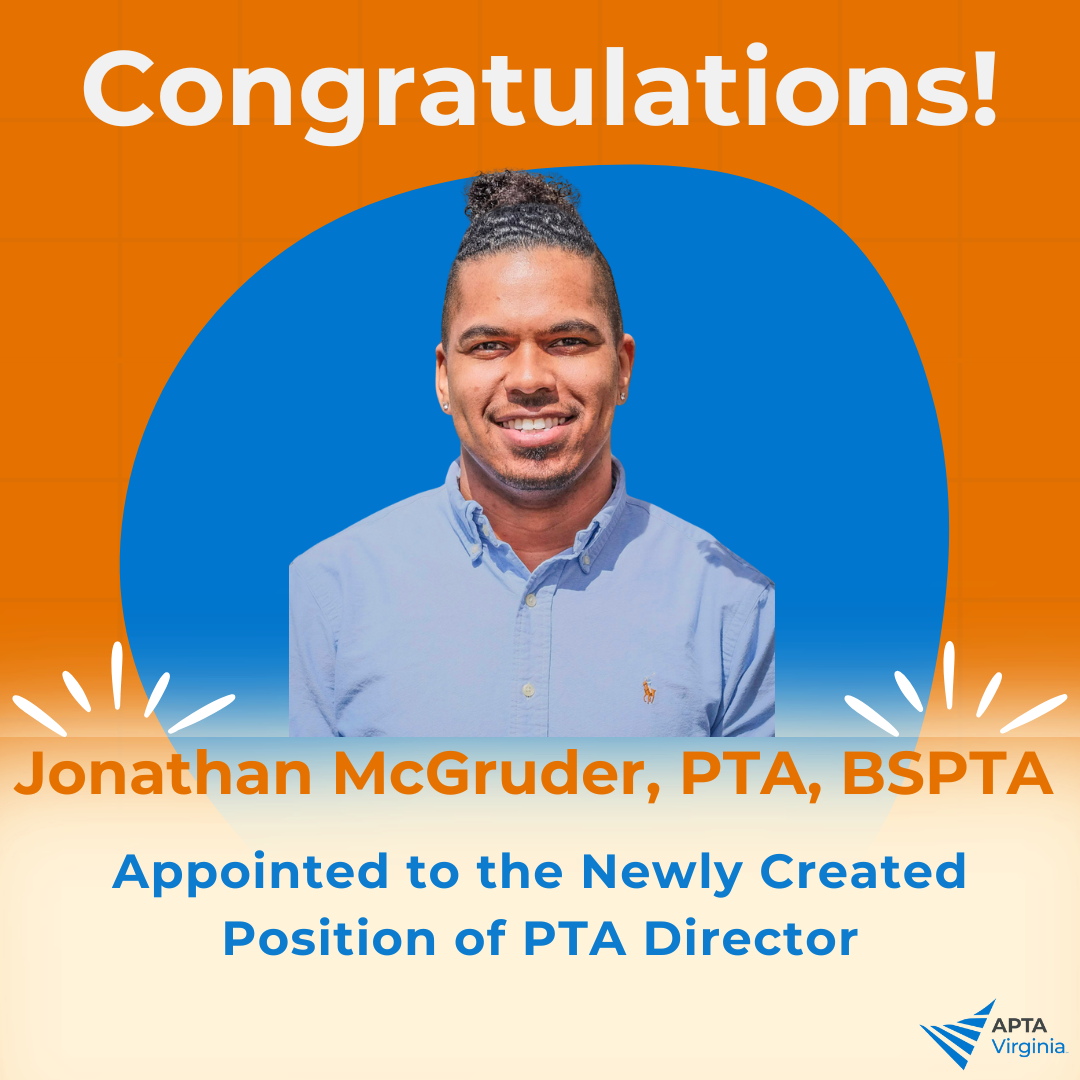
The board has announced the appointment of Jonathan McGruder, PTA, BSPTA, to the newly created position of PTA Director. This appointment underscores the board's commitment to collaboration with PTA's and formalizes their representation at board meetings. While Physical Therapist Assistants have long been eligible for regional director positions, this new role guarantees their voice is heard in board decisions. |
|
|
University of Lynchburg DPT Students Embark on Life-Changing Study Abroad Journey |
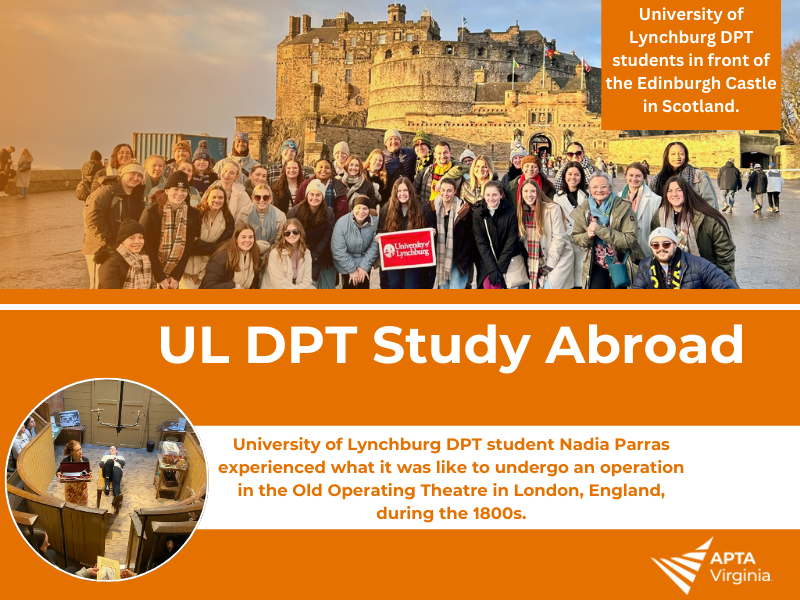
In January 2025, 37 University of Lynchburg DPT students traveled to England and Scotland for an elective one-credit course, "History of Anatomy in the Age of Enlightenment," led by DPT professors Dr. Price Blair and Dr. Lee Ann Eagler, and coordinated through Global Explorers, LLC. By exploring the history of medicine, students gained insight into how past practices have shaped modern anatomy and medical advancements.
Trip highlights included visits to the Royal College of Physicians in London and the Hunterian Museum in Glasgow, where students examined preserved dissections and pathological specimens. A "Blood and Guts" tour highlighted the unethical and illegal acquisition of many anatomical specimens, emphasizing the importance of medical ethics. At the Old Operating Theatre, students learned about the harsh realities of 19th-century surgery, including the absence of anesthesia, sterile conditions, and postoperative physical therapy.
Beyond historical learning, students experienced new cultures and navigated unfamiliar cities, with several traveling internationally for the first time. These historical and cultural experiences broadened their perspectives, enriching their understanding of physical therapy practice. |
|
|
APTA Virginia Partners with MedBridge |
|
|
APTA Virginia and MedBridge, the leader in online education for Physical Therapy, have partnered to provide accredited, video-based, online education taught by industry leading instructors. The comprehensive education platform includes clinical education, patient education, and home exercise programs to enhance clinical excellence, engage patients, and improve outcomes - all included in one annual subscription.
Premium Annual Subscribers get unlimited access to: -
Continuing Education: Growing library of 2,200+ accredited courses taught by industry-leading professionals, featuring motion graphics, 3D models, and live patient demos.
- Patient Education: Customizable for all levels of health literacy, featuring 3D models and animated videos explaining common conditions.
- Home Exercise Programs: Clinicians can choose from 7,000+ exercises for easy-to-build HEPs, helping patients get better, faster.
Use promo code VPTA to get a Premium Annual MedBridge subscription for $275 (regularly $425). |
APTA Virginia updated its bylaws to be more efficient and member-focused. Key changes include:
Regional restructuring: 6 districts to 3 regions. Smaller, more efficient board: Reduced size, dedicated PTA rep. Committee optimization: Finance, Nominating, and Ethics committees made more streamlined. New Community Engagement Coordinators (CECs): for local support. Student election: Student rep now elected. Expanded delegate eligibility: More members can serve as delegates. |
|
|
Lifestyle Medicine and Physical Therapy
Attending to the six pillars of Lifestyle Medicine, specifically educating our patients in the lifestyle changes that can be made to achieve a healthier state may be a helpful addition to our PT interventions. The six pillars are: nutrition, physical activity, stress management, restorative sleep, social connection and avoidance of risky substances. Educating our patients on the benefits of a diet that consists of fiber and nutrient-dense foods rather than processed foods, is an important aspect of general health. Engaging in regular physical activity is the pillar of which we are experts.
Incorporating or advising our patients in stress-reducing behaviors such as listening to smoothing music, breathing fresh air, and engaging in a hobby may be helpful to the general well-being of our patient. Advising our patients to achieve 7-9 hours of sleep may have an impact on their ability to cope with pain and engage in healthy behaviors such as physical activity and allow the body to reset and recover. Social connections are important to the overall health of a person and may assist patients in finding meaning in their life. And finally, avoidance of risky substances such as alcohol can lead to reduction of toxicity in the body and further physical damage.
Lifestyle Medicine is a newer specialty of medicine that focuses on modifiable determinants of health and that physical therapists can incorporate into our practice. -Sources: 1.Overview of Lifestyle Medicine by Daniel Leyes, Nabila Patel, and Kelly Correa. StatPearls. Feb 4, 2023. 2. LifestyleMedicine.org |
|
|
Working in our physical therapy field many insurances require a plan of care signature within 30 days of initial evaluation to stay in compliance. At our clinic, Mary Washington Rehab Services of Fredericksburg, we have implemented a process to assist in cutting down on denials received due to referring providers signing documentation past the 30-day mark. This process has provided the two-fold benefit of helping to decrease our insurance denials and allowing for greater continuity of care with patients.
We utilize EPIC EMR which allows for a “pending signatures” report to be generated based on therapist providers and date range. We have begun utilizing this report weekly and generating a list of pending signatures that are typically referring providers not within our EMR network. After generating our list, we can reach out to physician offices either via electronic fax or contacting the offices directly to garner their signature. The treating therapists are notified of missing signatures at 1-week past evaluation and each subsequent week to assist in facilitating signatures for the plan of care. As clinicians, the last thing any of us want for our patients is a gap in care that could lead to a delay in recovery. This process has been beneficial in decreasing denial frequency and optimizing patient care, making it a highly useful tool for our clinic and potentially useful to yours as well. |
|
|
Volunteering with APTA Virginia |
The process of being nominated, elected, and serving with APTA Virginia ensures that dedicated individuals with a passion for advancing the field of physical therapy have a platform to lead. This process begins with the nomination phase, where individuals are recognized for their potential and dedication to improving physical therapy in Virginia.
Members of the nominating committee are responsible for identifying these individuals, and we need your help to both find and support them. Once nominated, candidates proceed through an election process, allowing members to vote for those they believe best represent their interests and can effectively contribute to the organization's goals. Jason Gulstrom, an outpatient physical therapist in Lynchburg, was approached by a member of the nomination committee in this manner. He is now an elected director of APTA Virginia, with the opportunity to lead and serve the profession.
Serving with APTA Virginia provides individuals with the opportunity to influence policy, advocate for the physical therapy profession, and contribute to its growth within the state. The organization offers a platform for professionals to collaborate, learn, and share best practices.
As a volunteer, you will be part of a community that strives to impact the future of physical therapy in Virginia. An informational meeting will be held on June 10 at 7 PM ET for anyone interested in volunteering with APTA Virginia. You can learn more about the available opportunities and how you can get involved in shaping the future of physical therapy in our state.
Please contact [email protected] for more information. |
|
|
Words From the CSM Award Recipient |
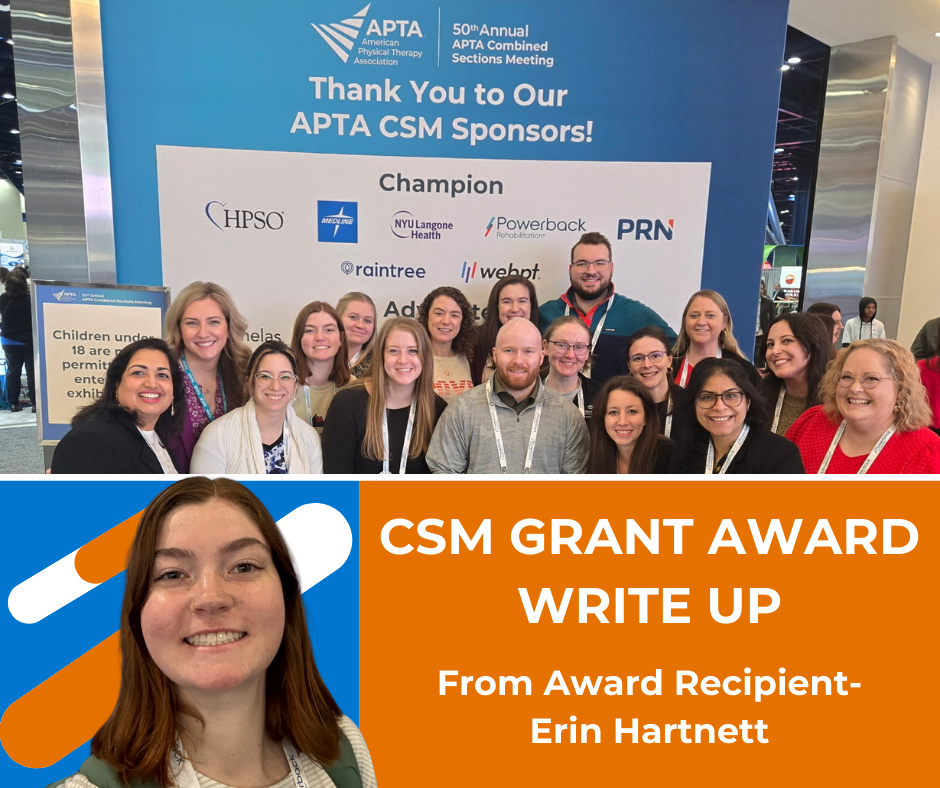
Attending the APTA Combined Sections Meeting (CSM) was an eye-opening and educational experience that provided invaluable opportunities for both professional and personal growth. As a second-year Doctor of Physical Therapy student, I gained further exposure to the diverse areas of expertise within physical therapy, creating an environment conducive to learning, networking, and exploring the field's vast offerings.
Throughout the three-day meeting, I attended over nine educational sessions covering topics ranging from evidence-based practice to innovations in patient care. Some of my favorite sessions focused on movement analysis in pediatric patients, differential diagnosis for neurologic populations, and strength training for adolescent dancers.
These sessions expanded my existing knowledge while also introducing me to new perspectives that I can apply throughout my education and future practice. Additionally, I explored a large exhibition hall featuring various post-graduation employment opportunities and the latest technologies in treatment, modalities, and assistive devices. This provided an ideal environment to network with professionals from across the country and discover the diverse opportunities available post-graduation.
CSM not only provided me with extensive knowledge but also the opportunity to connect with students from other universities and my own university's third-year students. Being able to speak and relate to others on a similar path fostered a sense of community, reinforcing my excitement for this profession. Overall, my experience at the APTA CSM conference significantly enhanced my knowledge and experience. I look forward to applying the insights gained from the conference to my future practice and current education.
-Erin Hartnett CSM Student Grant Award Recipient |
|
|
The Solution to Any Clinic Problem: DOG |
Does your staff ever suffer from low moral? Solution: Dog Do you need a way to motivate clients? Solution: Dog Want a way to brighten everyone's day? Dog
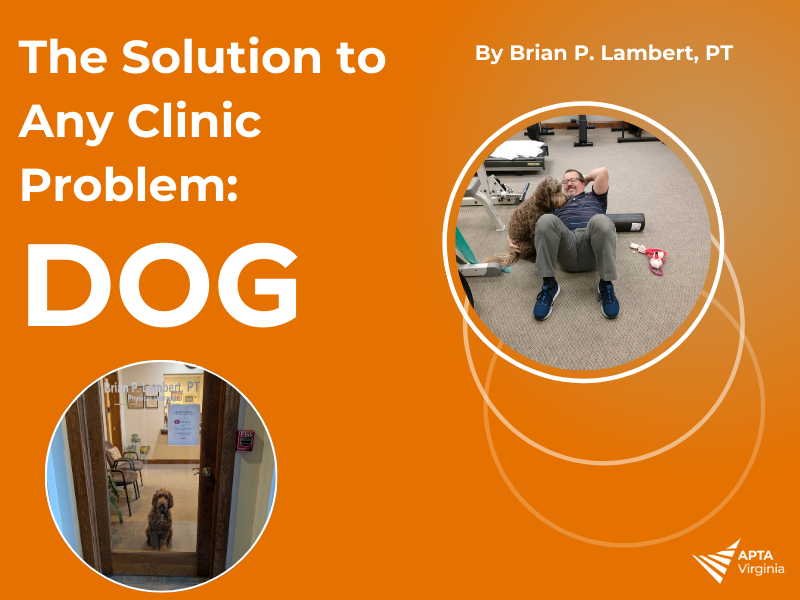
Dog! It works in my office. About two years ago, I started bringing Gigi, our three year old Labradoddle to my office. She was immediately popular with both my staff and clients. She is "scheduled" to work on Tuesdays and Thursdays from 9 a.m.-3 p.m. We now have clients that schedule appointments only on those days. Often, they will come in bearing treats and sometimes even with dog toys.
"Doodles" are the perfect office dog. They don't shed, are hypoallergenic, and are extremely cute and friendly. Gigi will usually "greet" clients as soon as they come in the door. Then, she will return to her dog bed in our business office to await the next arrival. Sometimes she will remain with a favorite client for extra attention that might be a back rub or treat. With new clients, we make sure they are ok with dogs before Gigi goes out into the reception area. Ninety-nine percent of our clients enjoy seeing a dog in a clinic.
It might not work in every situation, but for us, having a dog in our clinic is a wonderful extra service for clients and staff. Try it if you can. |
|
|
Co-Brandable Patient Education Materials! |
We’re excited to introduce a new member benefit designed to enhance patient education and awareness! Our latest collection of co-brandable public awareness materials allows members to customize professionally designed resources with their branding and share them with patients and communities.
These peer-reviewed materials cover essential topics like dizziness management, Long COVID, physical therapy’s role in wellness, reducing unnecessary imaging, and patient advocacy. Unbranded versions are also available for public access.
We extend our gratitude to the authors and peer reviewers who contributed their expertise to these valuable resources. Interested in contributing? We’re looking for more member-driven content to expand our library! |
|
|
Calling all APTA Virginia members—PTs, PTAs, and students! We want to showcase you. Share your contributions, experiences, and impact as a member of our community.
This is your chance to inspire others and highlight the incredible work being done across our profession. Whether it's a unique project, a career milestone, or your journey as a member, we want to hear it! Don’t miss this opportunity to shine. |
|
|
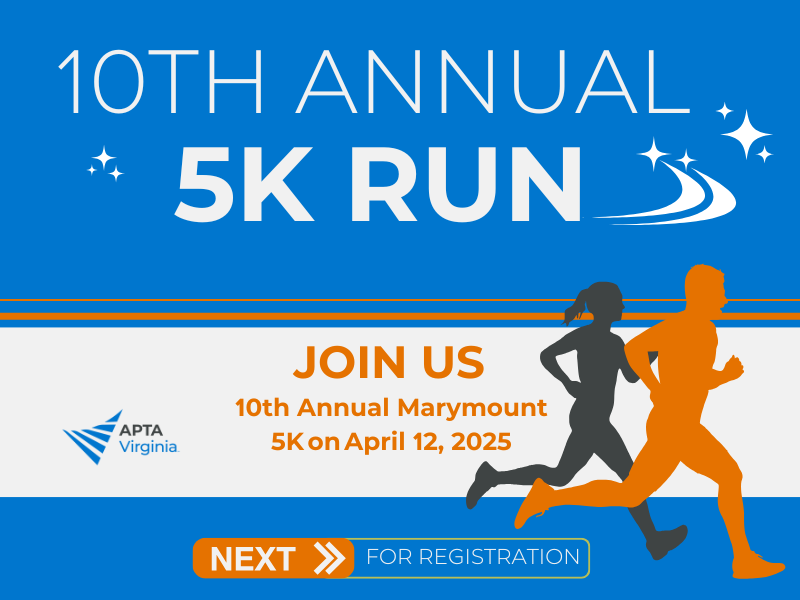
Get ready to run for a cause! Marymount University’s Doctor of Physical Therapy (DPT) program is proud to host its 10th Annual Marymount 5K on April 12, 2025—an event that combines fitness, fun, and philanthropy.
By participating, you’ll support our mission of Global Perspective, Service to Others, and Intellectual Curiosity. Proceeds help fund life-changing medical missions, where our students and faculty provide physical therapy services to underserved communities in Central America and rural America.
From nursing homes to hospitals, we deliver essential care, education, and rehabilitation to those in need. Our impact? Over 14 years of building self-sustaining physical therapy practices, including an orphanage in Costa Rica for individuals with severe neurological disorders. These efforts continue across Guatemala and Nicaragua, ensuring lasting, accessible healthcare. Come for the run, stay for the fun! Enjoy food, drinks, and family-friendly activities in a lively, community-driven atmosphere. Lace up, make a difference, and be part of something bigger! Author: Kayla Gray-Hillian, SPT Doctor of Physical Therapy, Class of 2026
APTA Liaison, Marymount University |
|
|
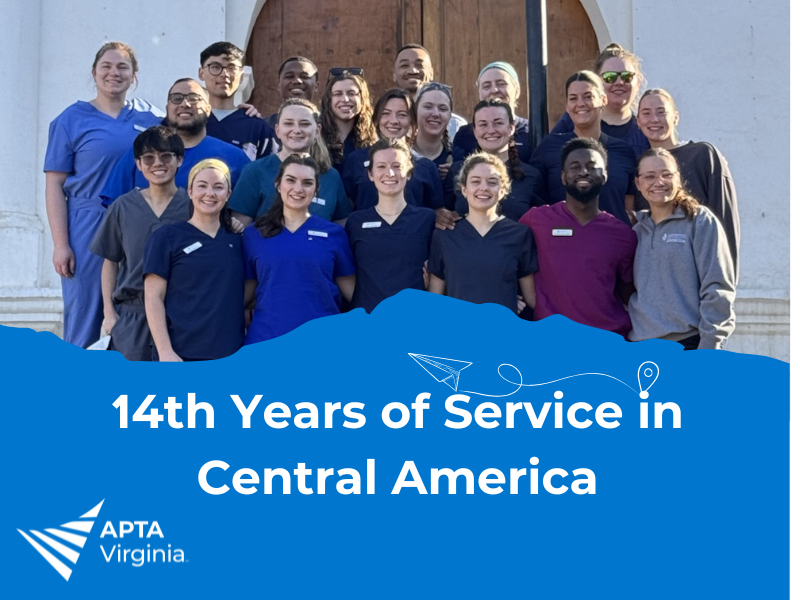
Marymount University’s Doctor of Physical Therapy Program recently completed a two-week service-learning trip to Soloá, Guatemala. This trip marked the 14th year of service in Central America. Twenty-two third year students and five faculty members worked together to provide physical therapy services fulfilling the university’s mission.
Outside of increasing the in-country awareness of the profession, the team engaged in several projects to provide physical therapy to the community. The first included preschool motor development screenings to identify early intervention opportunities. Working alongside two local physical therapists, the team also constructed custom walkers for 10 children, granting them newfound independence. Services such as wound care, patient and caregiver education, and musculoskeletal and neuromuscular interventions were provided to patients of all ages during open clinics and home visits. In addition to the clinical work, the team participated in a project to improve health and safety by constructing stoves to replace open fire cooking in rural homes.
The trip also provided opportunities for student growth, sharpening their clinical reasoning and differential diagnosis skills. In addition, working in a culture different than their own, allowed for rich reflection and discussion surrounding cultural humility. Lastly, it reinforced the mission of Marymount University to prepare compassionate, skilled professionals who contribute meaningfully to their communities. Respectfully submitted by: Megan W. Moran, PT, DPT, EdD
Board-Certified Clinical Specialist in Sports Physical Therapy Associate Professor Marymount University Kelly J. Negley, PT, DPT, EdD Board-Certified Clinical Specialist in Neurologic Physical Therapy Associate Professor Marymount University |
|
|
Imagine a world where our patients could get all the services and equipment they needed to be safe and stay in their own homes.
The Foundation for Rehabilitation Equipment Endowment (FREE) is working towards realizing this goal. It is a volunteer led non-profit that collects, sanitizes, and repairs gifted durable medical equipment to low income, uninsured, and underinsured adults in Virginia.
All therapists are aware of the limitations of insurance coverage for DME. When only one mobility device is covered, patients choose to have the safer and more expensive wheelchair. Medical bills pile up quickly and after hospital bills, doctor visits, medications, and loss of income, “unnecessary” DME is last on the list of things to afford.
In 1999, Dr. Bruce Stelmack, a physiatrist in Roanoke noticed that his patients were weaker and not as active after being discharged from inpatient rehabilitation. They didn’t have the equipment they needed to be safe. He enlisted a recreational therapist, Robin Ramsey, to assist in filling this gap. Seed money was obtained from Carilion Roanoke Memorial Hospital, now Carilion Clinic and in 2000, they began the century by serving 9 people with 12 devices. In 2024, FREE served 4,056 clients with 6,023 pieces of equipment valued at $1,463,224. Robin Ramsey is now the executive director and COO of FREE. They have seven sites across Virginia and are opening a new site this spring.
FREE has partnered with Goodwill in many areas which passes donated DME on to FREE. It is funded by national, community, and healthcare foundations. FREE provided DME to individuals with disabilities in the aftermath of hurricane Helene. In January, they officially partnered with Sentara Health System to establish DME closets in each of Sentara’s Virginia hospitals as well as their mobile clinics.
Sheila Peters, PT has been involved with FREE since its inception and uses it to serve her patients who need the equipment on both a long- and short-term basis. “I see the difference it makes. You see the people it goes to. They can go home and be independent.” “Patients are very thankful.”
As PTs, we want to see our patients succeed and thrive. Our goal is to help our patients become independent, so they don’t need our services. In 2024, 92% of FREE clients had decreased falls, 95% had decreased emergency room visits, 97% had decreased hospital readmissions.
FREE has sites in Salem, Richmond, South Hampton Roads, Williamsburg, Lynchburg, Harrisonburg, Winchester, and a new site in Marion in the spring of 2025. There are many ways to get involved. As with all non-profits you can donate or volunteer.
Call your local Goodwill to find out if they are a site that partners with FREE. If so, encourage patients and community members to donate equipment to the local FREE office or to Goodwill. Most importantly, spread the word and offer this as a resource to your patients who cannot afford the equipment they need to be independent, active, and at home.
-Renee Tatum MSPT, GCS |
|
|
Sibshops, a program developed by the Sibling Support Project, provides peer support for siblings of children with disabilities in a lively recreational setting.
Led by trained Sibshops facilitators, Danielle Matkins, DPT of the FWCRT at ODU, launched a Sibshops program in the summer of 2024. This initiative addresses the needs of siblings of children with disabilities from the FWCRT and the broader community. The program serves siblings aged 5 to 15. Parents do not participate, allowing siblings to play and share freely while parents engage in adult discussions. Sibshops sessions include free play, structured games, snacks, crafts, and discussion time.
Discussions are intentionally guided, focusing on the "good and not-so-good" aspects of having a sibling with a disability, and often foster spontaneous dialogue among the children. Dr. Matkins uses themes to maintain the children's interest throughout each session. Past themes have included the Olympics, featuring a scavenger hunt; Halloween, where siblings dressed in costume and made slime during craft time; and a recent winter theme, a "snowy day," during which they crafted pipe cleaner and bead snowflakes, and baked cookies during the discussion portion of the session.
Sibshops offers a supportive, fun, and active environment where siblings of children with disabilities can feel special during their own dedicated gatherings. |
|
|
Mary Jamison and Nandina Ustaris are your Virginia co-state advocates for APTA Geriatrics. Our duties include welcoming new APTA Geriatrics members and connecting members with resources and opportunities that APTA Geriatrics has to offer nationally and locally.
We strive to support our fellow physical therapy practitioners working with older adults and the older adult community. In the past, we have connecting members preparing for the GCS exam, held balance screenings, and represented Virginia at CSM (Mary last year in Boston and Nandina this year in Houston). We are excited to hear about what other providers are doing across the state to help improve the quality of life for older adults and would love to connect with you. We have a Facebook group for Virginia and the APTA Geriatrics website has multiple special interest groups to get involved with (https://aptageriatrics.org/sig/). APTA Geriatrics membership is free for students!
The APTA Geriatrics Balance and Falls Prevention Credential course series will be held in our state in Newport News this year. Course 1 is May 2-4 and Course 2 is October 24-26. The cost is $1,135 for APTA Geriatric members and $1,340 for non-members. Registration closed on April 4, 2025. If you are interested in learning more about what we do, please email [email protected] or [email protected]. |
|
|
|