| April 5th — National Caramel Day |
|
|
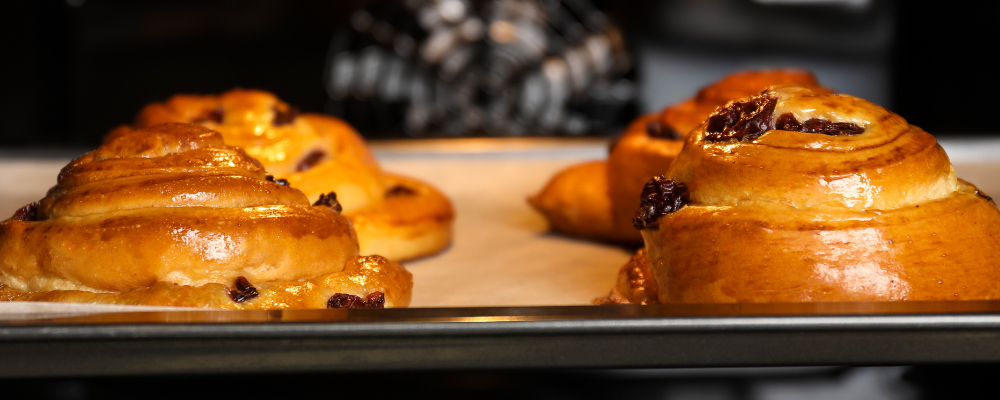
While caramel is a finished product, caramelization is the process that transforms simple sugars into the deep flavors, colors, and aromas in baked goods. It’s a reminder that in baking, the real magic often happens at the molecular level |
| |
|
From the crust of baked goods to the complexity of fillings and toppings, caramelization plays a critical role in creating the flavors and look consumers expect in products. Caramelization is a complex series of pyrolysis reactions that occur when carbohydrates are exposed to high temperatures, leading to the development of characteristic color, flavor, and aroma compounds. Different sugars caramelize at different temperatures, for example, fructose begins around 150°C, while maltose caramelizes closer to 180°C, making sugar selection an important consideration in formulation.
The process involves multiple stages that produce both volatile flavor compounds and brown-colored molecules. In bakery systems, factors such as temperature, pH, water activity, and sugar type directly influence the rate and intensity of caramelization. For example, monosaccharides caramelize faster than disaccharides, and systems with honey or high fructose syrup will develop more intense browning.
For commercial bakers, controlling these variables is critical. Proper management ensures desirable color and flavor development while avoiding excessive darkening or bitter notes, particularly in products where caramelization plays a key role in crust formation and overall product appeal.
Dive into the science of this process on the BAKERpedia article.
|
|
|
Understand the science behind great taste. This session delivers technical insight into how flavor compounds function in bakery applications, breaking down the “why” behind what we taste and how to control it.
From core flavor principles to practical formulation strategies, you’ll gain a clearer understanding of how to optimize flavor performance, avoid common pitfalls, and create better-tasting baked goods with confidence. Whether you’re refining existing formulations or developing new products, these insights can be applied immediately.
Speakers: Brett Pullins and Haim Grinspan, MANE Webinar length: 60 minutes Cost: Free |
| Bread Manufacturing Processing |
Strengthen your understanding of pan bread production with this comprehensive online course focused on the sponge and dough system. Designed to connect benchtop knowledge with real-world application, it walks through each step of the process—from scaling and mixing to fermentation.
With 20 interactive modules and built-in knowledge checks, you’ll gain practical insight to improve consistency, quality, and performance on the production floor.
Certificate: Upon passing final tests
Course length: 8 hours Cost: $250 for Members / $300 Non-Members |
|
|
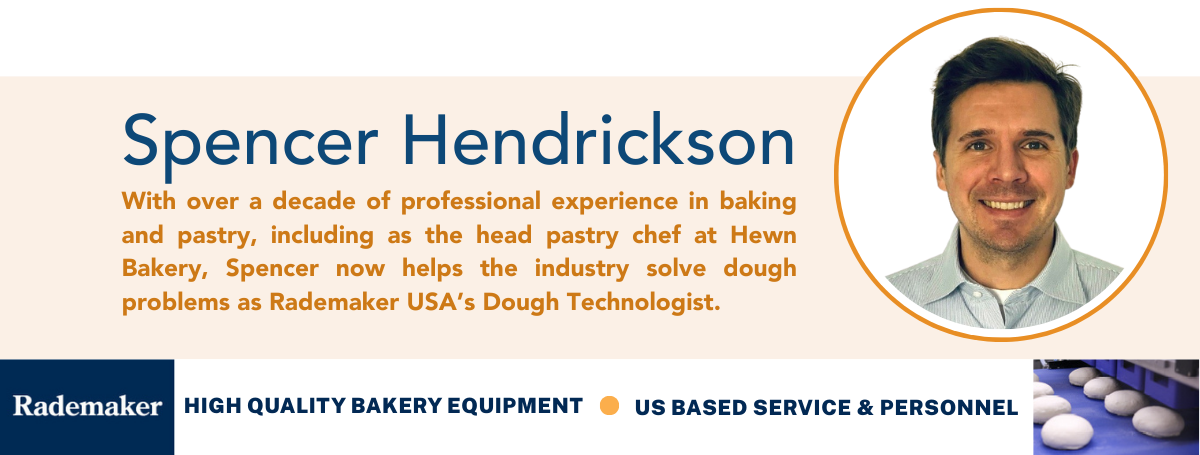
| Ask Our Dough Technologist |
|
|
Q: How do we transition our bakery production workflow toward a more automated system? |
Many artisan bakeries currently operate using a reversible sheeter for their dough processing followed by manual shaping. If you are looking to increase capacity, here are some ideas for scaling your production.
Small steps: If you are on a budget or want don’t want to dramatically change your processes, the next step up would be using a Make-up Table fed with pins or coils of dough collected from your reversable sheeter. When fed with a steady supply of dough, these Make-up Tables can shape a variety of products and provide a boost to your productivity without compromising your dough quality or process.
Bigger steps: If your reversable sheet becomes your production bottleneck, then the next step would be getting a full Sheeting Line. If you have already invested in a Make-up Table (such as the Radini/Rademaker platform), you can often integrate it directly with a new sheeting line. While sheeting lines are typically paired with dough extruders or pre-sheeters to form a continuous sheet, you can manually stack dough blocks onto the line. This manual method is more labor intensive but can save you money and minimize any changes to the profile of your dough using this new sheeting method.
Biggest steps: The ultimate goal of full automation is maximizing yield and speed while minimizing labor. While this "industrial" end-stage often distances a product from the "artisan" label, there are many intermediate levels of automation available that can alleviate daily operational stress without sacrificing your quality.
Artisan breads: Automating the delicate, hand-shaped nature of artisan loaves remains both technically complex and capital-intensive. However, the market for entry-level, compact, and affordable bread-processing lines is growing, making partial automation increasingly accessible to smaller shops.
Have a Dough Question? Submit it Here! |
|
|
Yeast Functionality in Bakery Production |
We're kicking off our Leavening Webinar Mini-Series with yeast! Understanding yeast is essential to consistent, high-quality baking. This foundational session explores how fermentation works, the factors that influence yeast performance, and best practices for handling and troubleshooting in commercial bakery environments. May 7th | 11:00 AM ET Register Today |
|
|
Make Smarter Bakery Equipment Decisions |
Evaluating bakery equipment goes beyond price and capacity. The Internal Equipment Evaluator (IEE) course helps your team understand how equipment design impacts sanitation, cleanability, efficiency, and long-term performance, grounded in the ANSI/ASB Z50.2 standard. Build alignment across teams and make more confident, informed purchasing decisions.
On-Demand, Self-Paced Course Learn More & Register |
|
|
American Society of Baking | 4231 W 96th Street, Indianapolis, IN 46268
Was this email forwarded to you? Subscribe and never miss an update! |
|
|
|