Rebuilding Hope in the Hill Country Weekly Update – December 8, 2025
|
|
|
Your support in action this week: |
In the wake of the July 4 floods, neighbors across the Hill Country continue to show up for one another. Here’s a quick look at the progress your support is making possible. Weekly stats: 32 disaster case managers are now serving families in Kerr and Kendall counties as the team continues to grow.
Over 600 households have been assigned a case manager; we are thrilled to note that the waitlist has been cleared, and every family in the Rebuild Kerr Needs Assessment has been assigned a case manager. - 111 households are in temporary housing (an Airbnb or rental homes) with support from the Community Foundation. Residents in temporary housing may stay – at no-cost - for up to 12 months from the date of move-in.
-
Home repair and rebuilding continues. The Foundation has three grantees currently doing this crucial work: All Hands and Hearts, Habitat for Humanity Kerr County, and the Hunt Preservation Society. As of today, four homes are complete, 47 are under construction, and 74 more are in the pre-construction phase.
|
Grant Opportunity: Know a Nonprofit Working to Support Community Recovery? |
The Community Foundation of the Texas Hill Country has opened the Community and Culture Fund questionnaire for nonprofits and public organizations serving Kerr County and Comfort. This first step helps determine if your mission and programs align with funding priorities such as community spaces, arts and cultural revitalization, river and riparian restoration, public safety and small business recovery. If your organization may benefit from this Fund’s priorities, you can learn more and begin the process below. |
|
|
The Family Mental Health Care Fund, fully funded by the Community Foundation and managed by the Meadows Mental Health Policy Institute, provides counseling and financial support to families who lost loved ones in the July 4 floods. The Fund covers expenses that insurance will not and helps uninsured families find low or no cost care. Get support: -
Call the Lucine Center Navigation Line: 832-244-9502
-
For help connecting to counseling, grief support, or other mental health resources.
- Submit documentation for reimbursement or financial assistance: form.jotform.com/252924398743166
-
Contact the Meadows Institute at 469-436-2371 with questions about eligibility or reimbursement
|
The Community Flood Recovery Needs Assessment is helping identify what Hill Country families need most after the July 4 floods, from housing repairs and financial strain to emotional and mental health challenges. This survey guides how recovery resources are directed and helps ensure assistance reaches every neighbor who needs it. If your household was affected by the storm, or if you know someone who was, please take a moment to complete or share the assessment. |
|
|
LA’s Story: Restoring the Home He Built With Love |
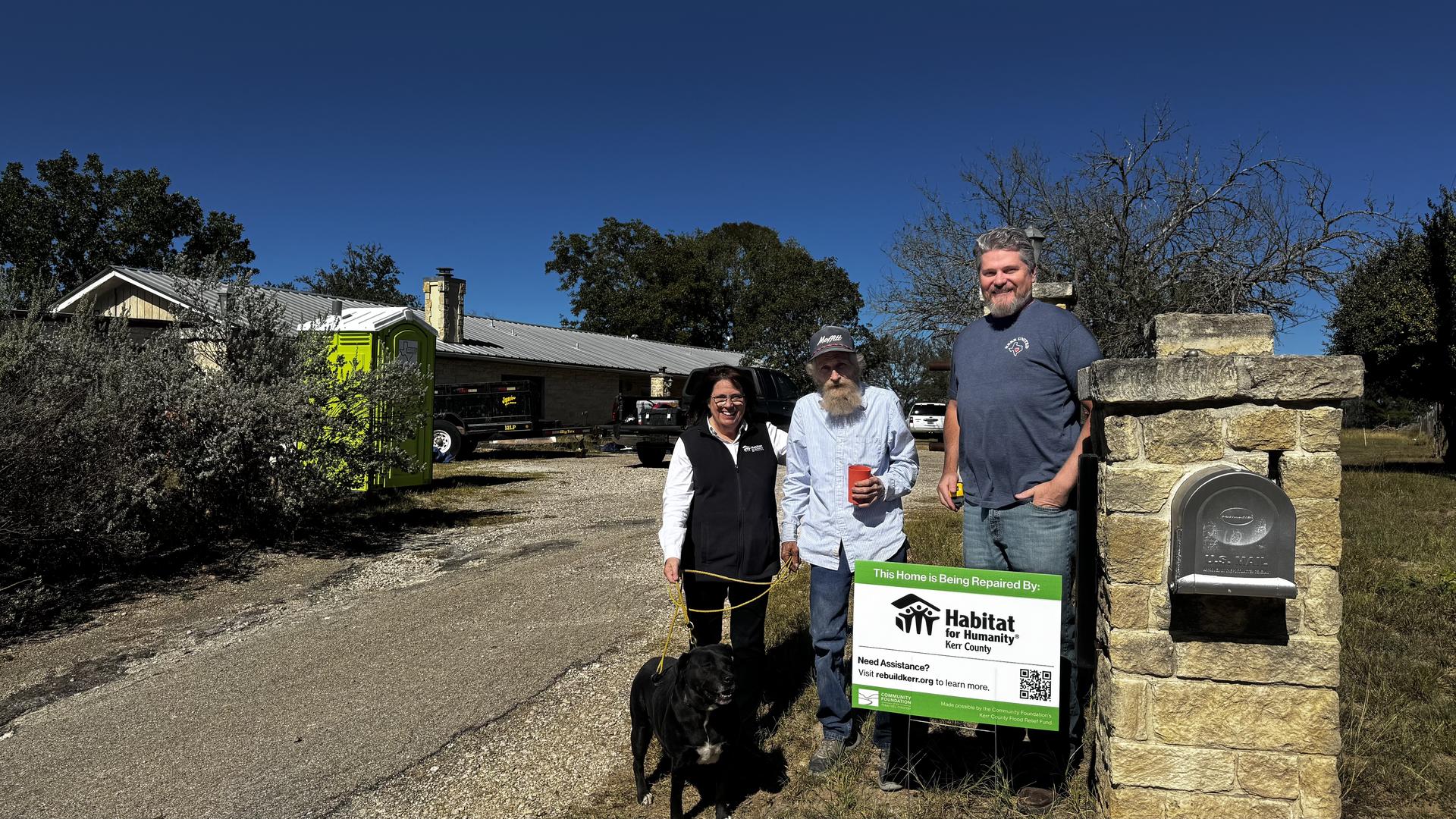
LA is a proud and independent man who built his home by hand for himself and his late wife. Every piece of the house held meaning and reflected the life they created together. When the July 4 flood severely damaged the home, LA tried to rebuild it on his own, determined not to ask for help.
When Habitat for Humanity’s construction manager Jay visited for the first time, he found LA living in an RV beside the damaged house. What began as a routine assessment turned into hours of conversation about the home LA built and the memories it holds. His quiet strength reminded Jay of his own father and the two formed a genuine connection. Over the following weeks, Jay often stopped by before work with breakfast tacos. Those early morning conversations became part of the rebuilding process. Together, they were restoring more than a structure. They were rebuilding LA’s sense of home, dignity and hope. The Habitat team is working to complete repairs before the holidays so LA and his dog can once again sit on their porch and feel at home. |
|
|
The Needs Assessment, launched August 4, 2025, provides a clear picture of what flood-impacted households need most, including housing repairs, financial support and health services. This information helps recovery partners target resources where they can make the most impact. |
|
|
Were you affected by the flood? |
| |
|
|